
Scott and Nickajack: Two Wannabe States who wanted to Secede from the South’s Secession
714 words

941 words
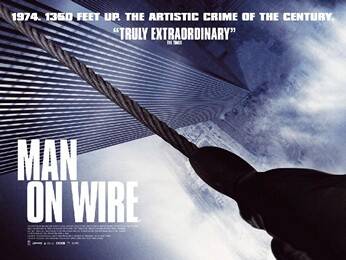
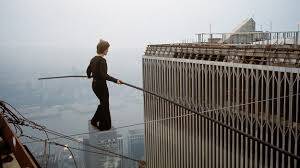
In 1974 French equilibrist Philippe Petit stunned a transfixed morning crowd of New York onlookers and panicked the local police by walking (completely untethered) back and forth across a high-wire strung between the two towers of the barely-completed World Trade Center, 410 metres above the metropolis pavement. This legendary feat, accomplished illegally and surreptitiously—commemorated in the 2008 Academy Award-winning documentary film Man on Wire—has been described as “the artistic crime of the century”.
For decades Petit has peddled the line that he had planned his NYC stellar walk for six years before it happened, even before the Twin Towers building had started construction! More recently, the high-wire artist has come clean that that was just mythmaking by the storyteller in him, admitting it was actually eight months from conception to implementation (‘Highwire walker shares the truth about death-defying Twin Towers stunt’, Flint Duxfield, ABC, 28 August 2024, www.abc.net.au).
The French artist’s funambulist marvel on the Lower Manhattan skyline was his most audacious, seemingly death wish-motivated skywalk, but it was not his first such venture into the clouds. The tenacious Frenchman has serious form in the stunt caper. Over the three preceding years Petit had several “trial runs” for his 1974 Twin Towers triumph, deliberating selecting iconic global landmarks to maximise publicity. In 1971 the youthful Petit with some help from his friends rigged up a cable between two towers of Notre-Dame de Paris Cathedral. Dressed in trademark black, Philippe set forth on the wire, prancing on tippy-toes 225-feet above the ground, stopping to do tricks, juggling balls, lying down on the cable, etc.
Next up for Philippe was Sydney’s famous Harbour Bridge in 1973. According to Petit, the bridge skywalk (his “miracle”) was undertaken after only three or four days in the harbour city without being pre-planned. Reasoning that in all likelihood he wouldn’t get permission from the local authorities Petit took his customary clandestine approach¹…aided by a small team of French and Australian friends (including future Oz filmmaker James Ricketson) Philippe trespassed unseen onto the harbour bridge infrastructure the night before the attempt, carrying materials including cables and ropes “borrowed” from the construction area up to the roof of one of the northern pylons. From there they managed to connect the cables and ropes to the pylon on the opposite side. On skywalk day Petit performed his “theatre in the air”, crossing unfalteringly between the pylons 142 metres above the water four to six times by his reckoning. All the while Philippe performed his signature routine which he would replicate at the Twin Towers – dancing joyfully on the rope, waving to and saluting the growing crowd of spectators below, lying down on the rope while maintaining his balance and so on. Meanwhile, traffic below on the bridge ground to a halt as motorists stopped to gaze up at Philippe’s show. Petit’s ended his star turn only after the police alarmingly started cutting the safety ropes supporting the wire cable. Forced down to ground level Philippe was arrested and fined $200. Ever the showman, he managed to steal the wristwatch of one of the arresting officers!
The relative ease with which Philippe and his determined team of collaborators were able to penetrate the out-of-bounds precinct of the bridge undetected, speaks volumes for the woeful inadequacy of the site’s security setup…this proved to be even more the case with the Twin Towers project where the team’s seamless, successful passage into and up to the top of the new complex happened right under the noses of (lax) security.
Petit’s fame on the high wire has prompted countless interviews during which the ultimate question always pops up…did he did fear, or perhaps rather, why didn’t he fear falling when he was up in the clouds? Petit always responds to this question with the assurance of unwavering positivity—or is it well-buttressed bravado?—stating that he does not fear it, adding that if he did fear falling at all, he would never attempt it in the first place. A touch of braggadocio there perhaps, but Philippe attributes his unwavering supreme confidence in his ability to succeed down to a process he undergoes, a sort of exercise in constructing a “mental net” below him which envelopes and protects him from falling as he makes the perilous (and for mere mortals impossible) crossing.
The high-wire ace also ascribes his success to preparation and planning, taking a holistic approach to the challenge at hand – in the lead-up to the Twin Towers spectacular, meticulous research gave him a clear picture of environmental and atmospheric conditions at the location (factoring in variables such as the extent to which the high towers might sway due to wind). Petit was also “hands-on” in the task of ensuring the engineering integrity of the project (creating models; rigging a 60m-long cable across the gap; personally designing the anchor-point, etc.) (‘Philippe Petit’s Sydney Harbour Bridge highwire walk halted went police started ‘cutting the ropes’”, Rosemary Bolger and Richard Glover, ABC Radio Sydney, 28-May-2023, www.abc.net.au).
Endnote: Perhaps surprisingly Petit has no circus background, no formal training or family associations with the world of “Big Top” performing, but began the journey to a career of acrobatic wizardry by busking as a juggler with both feet firmly planted on Mother Earth. Nonetheless, the über-driven and flamboyant Parisian was born to it, being both quintessential artist and showman – and can talk the talk…listen to any interview with Petit and you’ll see how adept he is at selling himself.
🔳🔳🔳🔳🔳🔳🔳🔳🔳🔳🔳🔳🔳🔳🔳🔳
¹ in fact the very illegality of the act is what spurs Petit on, born to be a rule-breaker, a provocateur in defiance of the powers that be
M. Petit, fashionably attired in 1970s flares crosses between the two towers ⇓
05 June 2026
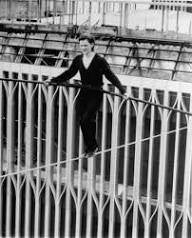
Source: AP
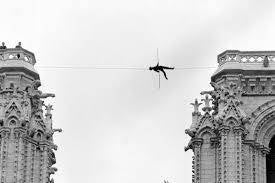
⇑ Time for a lie down while wire-walking Notre-Dame (source: Getty Images

⇑ Stepping out on the Sydney Harbour Bridge (photo: James Ricketson)
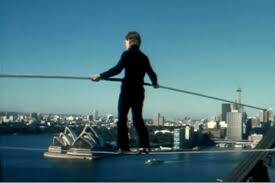
⇑ A glimpse of the not-yet opened Sydney Opera House (Ricketson)
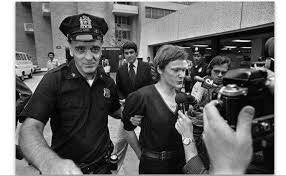
NYPD get their hands on the culprit ⇑


⏎ Edmund C Bentley, eponymous inventor of the clerihew
St Paul’s School, London: Birthplace of the clerihew
551 words
✑ ✑ ✑
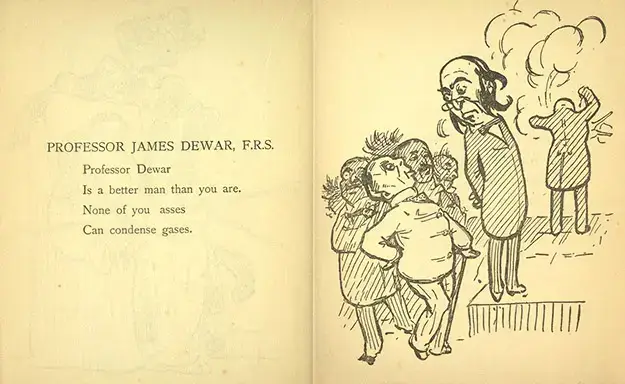
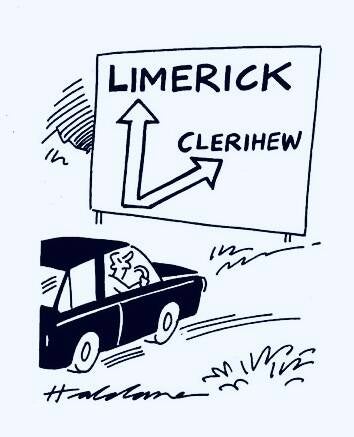
In a previous blog (13 May 2026) we looked at “shrink lit”, a modern take on the traditional short form of poetry, the haiku. This piece focuses on the clerihew, a sort of second cousin twice removed to the haiku. A more modern type of light verse than the Japanese haiku which boasts a pedigree stretching back four centuries, the clerihew had its birth in a science classroom at St Paul’s School, London, circa 1891. The schoolboy who invented the form and gave his (middle) name to it was Edmund Clerihew Bentley. A bored young master Bentley found himself diverted into penning little comical and nonsensical poems and was soon joined by a classmate (later a famous man of letters) GK Chesterton. This is considered to be the teenage Bentley’s first clerihew:
Sir Humphrey Davy
Was not fond of gravy.➊
He lived in the odium
Of having discovered sodium.
The clerihew possesses a simplicity of form, with just a few rules to observe: it has to consist of four lines (two rhyming couplets), which are typically of uneven length and irregular metre. The topic is biographical, the first line should contain only the name of a famous or well-known person. The clerihew employs a specific rhyme scheme, AA-BB, and it’s intent is (absurdly) humorous or possibly gently chiding➋. These are a selection of Bentley’s poetic efforts, including his most celebrated clerihews:
Sir Christopher Wren
Said, "I'm going to dine with some men. If anyone calls,
Say I'm designing St. Paul's."
☬ ☬ ☬
Henry the Eighth.
Had a chauvinistic faith:
To leave his wife in the lurch
he started a church.
☬ ☬ ☬
George the Third
Ought never to have occurred.
One can only wonder
At so grotesque a blunder.
☬ ☬ ☬
Lewis Carroll.
Bought sumptuous apparel
And built an enormous palace
Out of the profits of Alice.
For his clerihew on the subject of Ivanhoe author Sir Walter Scott, Bentley deviated slightly from the first line convention for the form:
I believe it was admitted by Scott.
That some of his novels were rot.
How different was he from Lytton
Who admired everything he had written!
As the clerihew gained popularity in the 20th century a number of serious and famous writers turned their hand to the form including Bentley's school chum Chesterton and WH Auden. Auden's interest was engaged sufficiently to publish a collection of clerihews in a book called Academic Graffiti – a couple of his better efforts include:
Henry Adams.
Was mortally afraid of Madams:
In a disorderly house
He sat quiet as a mouse.
☬ ☬ ☬
Louis Pasteur,
So his colleagues aver,
Lived on excellent terms
With most of his germs.
Even Bentley's own son, Nicholas, later on, had a decent stab at writing a clerihew:
Cecil B. de Mille,
Rather against his will,
Was persuaded to leave Moses
Out of “The War of the Roses.”
Footnote: the clerihew, because of it’s humorous, juvenile-like nonsensical nature and perhaps because it is gently mocking in tone, has had ongoing relevance as a teaching tool in engaging primary schoolchildren in the art of poetry-writing.
⧮⧯⧮⧯⧮⧯⧮⧯⧮⧯⧮⧯⧮⧯⧮⧯⧮⧯⧮⧯⧮⧯⧮⧯⧮⧯⧮⧯⧮⧯⧮⧯⧮⧯⧮⧯
➊ when Bentley published his first collection of clerihews in 1906, this line was changed to “Abominated gravy”
➋ the clerihew has been unflatteringly described as "rhyming doggerel”
31 May 2026


▲ Stalin, man of the peasantry
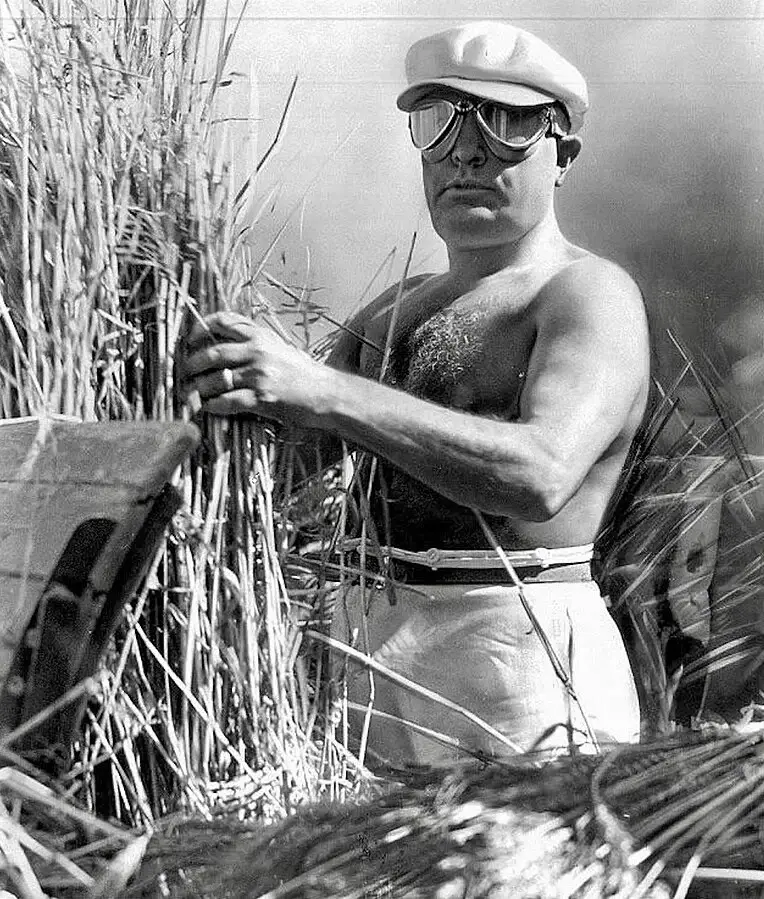
▲ Bare-chested Mussolini, the strongman/man of action pose
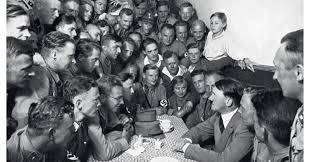
▲ Der Führer revelling in a “captive” audience

▲ The CARs (image: Shutterstock)
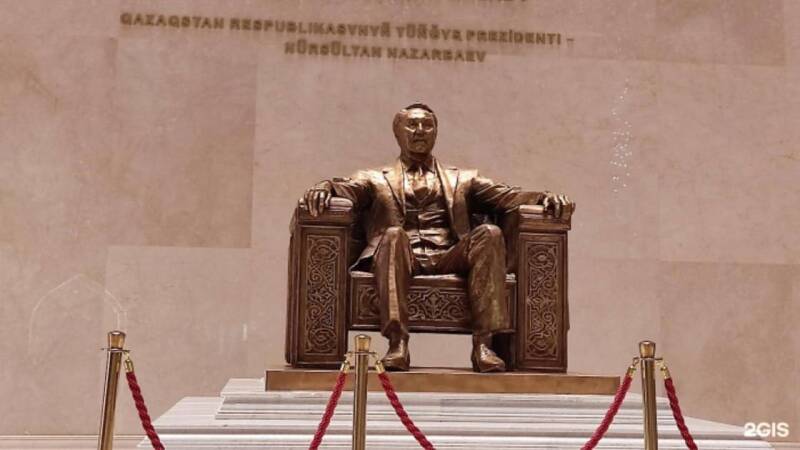
▲ Nursultan Nazarbayev, cast in bronze (source: Times of Central Asia)
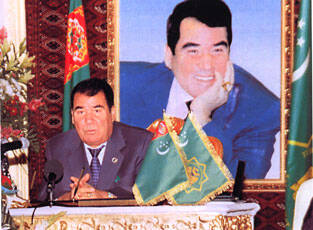
▲ Suparmurat Niyazov, Big Brother looking over my shoulder (source: Human Rights House)

▲ Tashkent monument to Islam Karimov
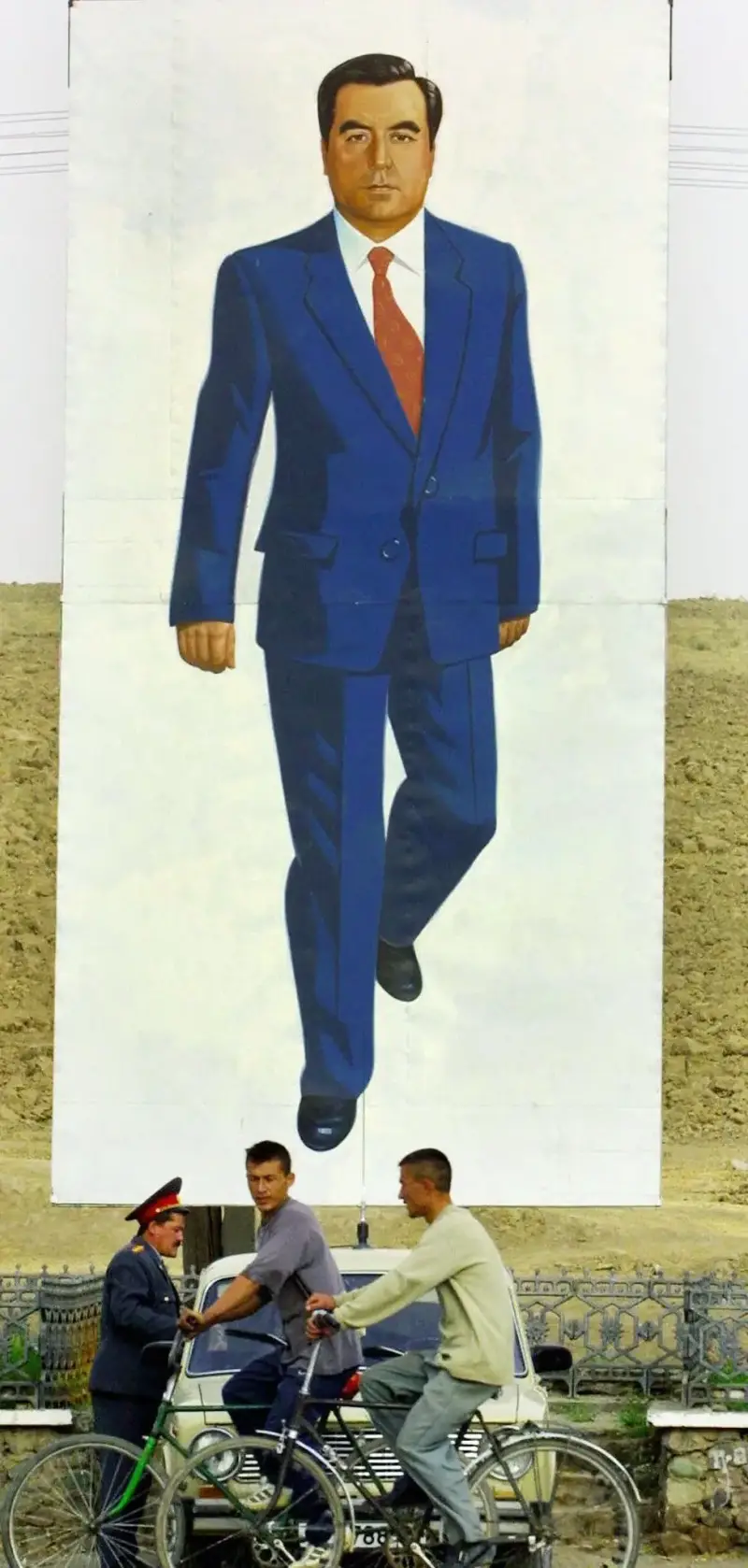
▲ Larger than life president for life: Emomali Rahmon
1160 words
The cult of personality stems from a political strategy where a profile of an individual is created which projects an idealised, heroic, larger-than-life image of the leader. This typically involves the leader entreating the masses through nationalist appeals (populism), employing the agency of mass media-funnelled propaganda. The intended outcome is exaggerated devotion by large swathes of the population to a single charismatic leader. Public spectacles, often on a grand scale, is another manifestation of the cult.
The phenomena did not originate with 20th century totalitarianism and the rise of authoritarian dictators, Hitler, Stalin and Mussolini, though these three interwar autocrats, through manipulation of mass media and saturation levels of propaganda, basically forged the blueprint for charismatic leaders to follow. Nationalistic leaders with a bent for extra parliamentary actions in the contemporary world of international politics have taken carefully note. We have seen versions of the cult in both democratic and non-democratic political systems (Donald Trump, Xi Jinping, Kim Jong Un, etc), but I want to turn the spotlight here to an internationally lesser-known region’s political leaders—one that doesn’t dominate the world news headlines like the above players do—and look at the praxis of the personality cult in the five Central Asian Republics (CARs).
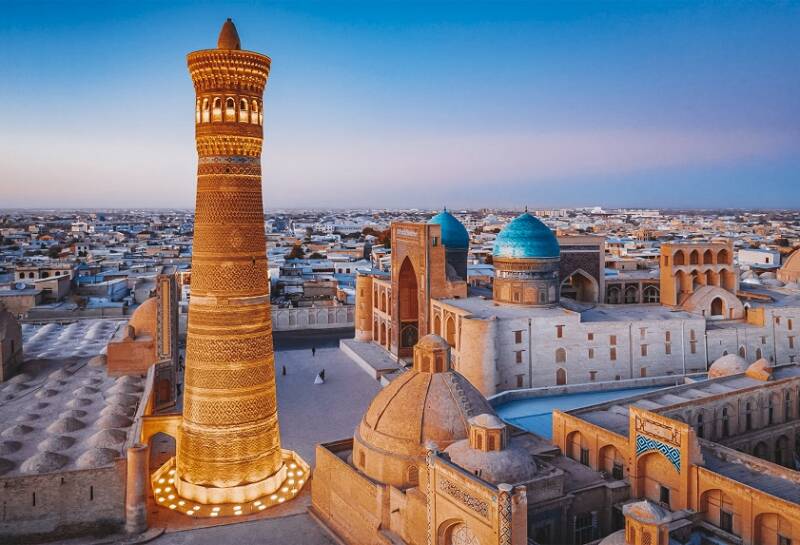
Over the 35 years that the Central Asian Republics—Kazakhstan, Kyrgyzstan, Tajikistan, Turkmenistan and Uzbekistan—have enjoyed their independence from the Soviet Union, authoritarian rule by former Communist Party bosses and tribal headmen have thwarted attempts to establish a parliamentary democracy in the political fabric of the various states. Nursultan Nazarbayev in Kazakhstan held the monopolising reins of the nation for three decades, the longest of all the CAR autocratic leaders. Appointed first secretary of the Kazakh Soviet Socialist Republic (SSR) in 1989 he was elected unopposed as foundation president of newly independent Kazakhstan in 1990. Nazarbayev consolidated his hold on power through a sequence of increasingly blatantly undemocratic elections, neutralising political opposition, nepotism and systemic corruption and human rights abuses. As a concomitant of all this Nabarbayev played the personal veneration card which helped to underpin the totality of his paternal control over the state. Ordinary Kazakhs were inundated with everyday reminders of Nabarbeyev’s centrality in their lives, with the autocrat’s eponymous overlay on Kazakh society – universities, schools, airports, parks, avenues, etc were named after him. Statues of him adorned squares, his portrait emblazoned on Kazakh banknotes. No excess of adulation was too much, he was bestowed with the title of Yelbasy (“Leader of the Nation”) and in 2019 a sycophantic parliament even renamed the country’s capital, Astana, “Nursultan” in his honour(ꪖ).
Nabarbayev’s fellow dictator in neighbouring Turkmenistan, Suparmurat Niyazov, pursued a similar path to forge an iron grip on his country. Niyazov who also came to the presidency from being first secretary of Turkmen SSR under the Soviets managed to stay at the helm until his death in 2006. He did so by purging rivals from administrative posts, especially those from Turkmenistan’s largest and most influential Teke tribe. Seeing off regional challengers enabled Niyazov to centralise the political system and implement a personal style of rule over the Turkmen, demanding an unwavering loyalty to the presidency. Niyazov’s cult of personality followed the Stalinist template, adopting the title Türkmenbaşy (“Father of the Turkmen People”) which he reinforced on the Turkmen consciousness by renaming January “Türkmenbaşy”. Niyazov added the usual glosses to his personality cult with standard shows of self-glorification for public consumption, erecting a huge rotating golden statue to himself in the capital Ashgabat.
If we turn to Uzbekistan, the most populated of the CARs, Islam Karimov is the political heavyweight who trod that same well-worn path to dictatorial dominance as his counterparts in Kazakhstan and Turkmenistan. Karimov rose from party boss in the old Uzbek SSR to be elected on suspicious grounds as the first president of independent Uzbekistan. Moving to consolidate power, he eventually reduced both the legislature (the supreme parliamentary body) and the judiciary to “rubber stamp” status, “effectively serv(ing) as instruments of the executive branch" (ie, the president)(Freedom House). By the time Karimov died in 2016 there were elements of the personality cult on display—Karimov’s ho-humdrum tracts university-required reading for students; comparisons with historic Turco-Mongol conqueror Tamerlane—but the cult worship of the posthumous leader really took off under his successor as president, Shavkat Mirziyoyev. In death Karimov was granted the title of Yurtboshi (“Hero of Uzbekistan”), statues of the late dictator were unveiled and museums were named in his honour.
Emomali Rahmon, president of Tajikistan since 1994, has also been the beneficiary of the contagious, uncritical leader worship phenomena prevalent throughout Central Asia. Having led Tajikistan through a devastating civil war in the 1990s, the state-controlled media promoted Rahmon as “Saviour of the Nation” and “Founder of Peace and National Unity”, echoing the titles lavished on the presidents in Tashkent and Astana. Schoolchildren are indoctrinated with a narrative about the president’s “heroic life and deeds”; fawning poets and clerics sing his praises in overblown song and verse for the public to lap up; villages have been named after him (‘Rahmonobod’), statues erected, etc. Critics of the regime have attributed the upsurge in the projection of Rahmon’s personality cult that occurred in the 2010s to Tajikistan’s declining economics. The near-deification of Rahmon as leader has gone hand-in-hand with the regime’s monopolisation of power and financial control in the hands of the president and his family and the marginalising of political opponents and restriction of citizens’ freedoms.
Kyrgyzstan is in some respects the odd man out in this pentad of republics in the region. Since gaining independence from the USSR it has not been dominated by one political figure for many years but has had several elected presidents, a reflection of the nation’s greater tolerance for parliamentary democracy(᥇). The Kyrgyzs have a different take on personality cults as well. During the rule of successive presidents Akayev, Atambayev and Japarov, there were attempts to foster moderate cults of personality(ᥴ), however, culturally, Kyrgyzs tend not to worship living autocrats but instead they look to the historic oral epic of the mythic warrior-hero Manas. Monuments to Manas abound in the Kyrgyzstan capital of Bishkek and other cities and leaders invoke his name to a device to generate a sense of national cohesion.
◧◨◩◪◧◨◩◪◧◨◩◪◧◨◩◪◧◨◩◪◧◨◩◧◨◪◧◨◩◪◧◨
(ꪖ) the capital reverted to Astana in 2022
(᥇) however political pluralism in Kyrgyzistan has had a hit under the current president, the ever-more autocratic Sadyr Japarov who has increased his power at the expense of parliament
(ᥴ) not exactly a personality cult but Japarov elicits a messianic following among his supporters
Reference articles:
‘Kazakhstan in Context: Cult of Personality’, Kenza Bouanane, Human Rights Foundation, 18 February 2022, http:hrf.org
‘Uzbekistan: Even in death, cult grows around Karimov’, Joanna Lillis, 06 July 2018, www.eurasianet.org
Katarzyna Jarosz, ‘Medieval Heroes and Building Personality Cults’ in Museums in Central Asia and the Construction of National Narratives (Sept 2025) www.researchgate.net
‘Turkmenistan and Central Asia after Niyazov’, Dr Stephen J. Blank, US Army War College Press, 2007
‘Emomali Rahmon’s Ever-Growing Cult of Personality’, Casey Michel, The Diplomat, 18 February 2016, www.thediplomat.com
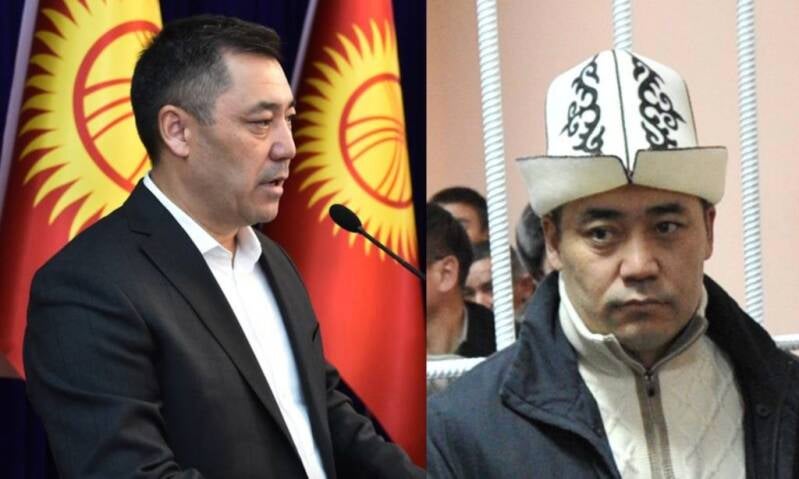

▲ (above) President Japarov, Trumpian complex? (source: novastan.org)
Manas, the legend and national hero invoked by Kyrgyzs (Image: Kostya/Freepik) ▲
28 May 2026

19 May 2026 7:54 am
714 words


American poet Maurice Sagoff in the 1970s pioneered the literary genre of Terse Verse.
13 May 2026 9:12 pm
Maurice Sagoff’s 1971 Shrinklits book (2nd edition 1980) pioneered the literary genre of “Terse Verse”
617 words
🥸 🥸 🥸
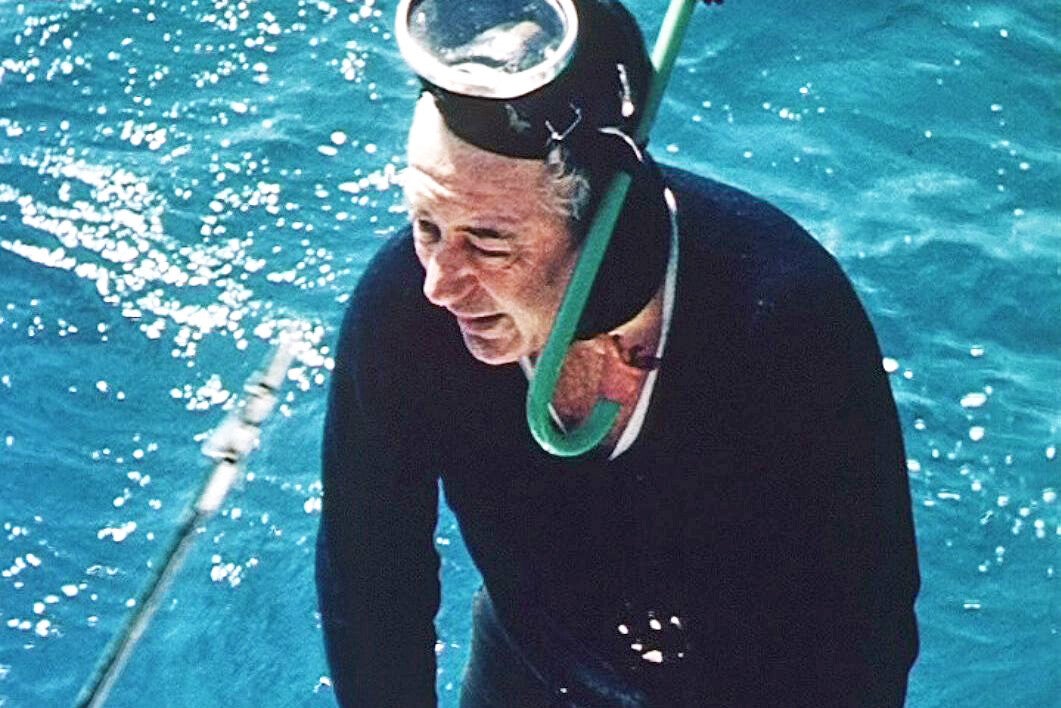
Leaders of sovereign countries generally don’t tend to suddenly disappear without trace. In fact it’s very uncommon. When Australian prime minister Harold Holt disappeared in heavy surf off Cheviot Beach, near Portsea on the tip of Mornington Peninsula in 1967 without his body ever being recovered, he was the first head of state to suffer such an enigmatic fate in nearly 400 years. The last (very different) occurrence had been in 1578 when an obscure Portuguese king died without his body being recovered, having sleepwalked his army into a disastrous battle in Morocco.
The unsolved mystery of Harold Holt’s disappearance and apparent death has entered into the pages of Australian folklore. Holt had ventured into the sea for a quick dip, and according to his friends and neighbours watching from the shore, one moment he was swimming energetically and the next he clean disappeared under the waves, never to resurface. Notwithstanding that the consensus of opinion is that the prime minister probably accidentally drowned in what was very rough and treacherous ocean waters, ultimately, the inevitable conspiracy theories emerged—described by the ABC as “an avalanche of wild and persistent theories”—many of which have sustained themselves over the decades. The most picturesque one has it that Holt, capitalist-affirming arch-conservative that he was, was in reality a Chinese spy and that he was picked up in the turbulent waves of the Bass Strait by a PRC submarine and whisked back presumably to Beijing. In the prevailing Cold War climate of the time some “conspiracy whisperers” asserted that Holt’s death was not an accident but the result of foreign sabotage (citing the close friendship between the Australian PM and LBJ)Ⓐ, while others allege that Holt had faked his own death and was still living, shacked up incognito with his mistress somewhere (perhaps not still in 2026). Yet another theory pointed to suicide for a prime minister who was under both political and personal pressures.
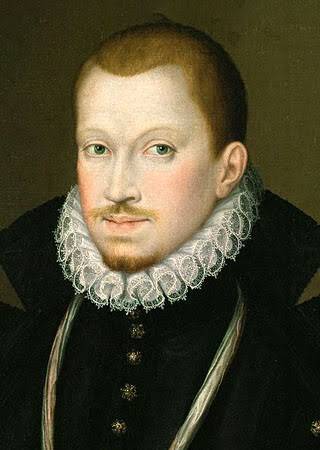
The previous instance of a ruler disappearing mysteriously without explanation was a very different affair. Sebastian I, the youthful king of Portugal, vaingloriously hellbent on continuing the Reconquista (Christian reconquest of Iberia from its Islamic rulers), unwisely engaged in a North African war against the Saadi Sultanate of Morocco in 1578. Sebastian’s combined Portuguese/mercenary force was defeated at the Battle of Alcácer Quibir with the king last seen charging into the enemy ranks only to vanish totally from sight in the melee. Sebastian was presumed dead but the body of the king was never definitively identifiedⒷ. As a consequence the majority of Portuguese people refused to believe that he was dead and a powerful messianic national myth known as Sebastianism took shape in Portuguese minds…this posited that Sebastian was actually in hiding, perhaps on a mythical island, waiting for the opportune time to return and restore the Portuguese nation to its past glory. King Sebastian’s reckless foray into battle on foreign soil was a catastrophe sans mitigation, not just for him personally but for Portuguese expansionist aspirations and ultimately for the country’s very independence. As Sebastian was childless and thus heirless, his death destabilised the Portuguese crown…the ensuing succession crisis allowed the Spanish King, Philip II, to take advantage of the political vacuum and incorporate Portugal into a subordinate union with Spain in 1580.
💮ᕕ💮ᕕ💮ᕕ💮ᕕ💮ᕕ💮ᕕ💮ᕕ💮💮ᕕ💮ᕕ💮ᕕ
Ⓐ a variation on the popular “Holt taken by a Chinese sub” theory has Harold as the unwilling passenger being kidnapped by the Chinese communist regime for the purpose of political interrogation
Ⓑ there were various claims to have recovered the corpse of Sebastian but doubts persist as to their veracity
𖡒 𖠑 𖡒 07 May 2026 𖡒 𖠒 𖡒
Below images 1 & 2: Avid water sports enthusiast Harold Holt
Image 3: Sebastian the Not-So Wise
This is where our journey begins. Get to know our business and what we do, and how we're committed to quality and great service. Join us as we grow and succeed together. We're glad you're here to be a part of our story.


Welcome to Mondo Blogo, your destination for unusual and captivating stories. Dive into history, geopolitics, art, and more, all from a unique perspective. We're here to spark your curiosity and broaden your horizons. Join our community of explorers.
Mondo Blogo covers a vast array of topics, ensuring there's always something new to discover. We delve into history, geopolitics, international relations, literature, cinema, and the arts, alongside organised sport and evolving societal ideas.
Mondo Blogo started as a personal passion project, driven by a desire to share intriguing stories beyond the mainstream. Our mission is to explore and present content that challenges perspectives and fosters deeper understanding, focusing on quality and unique insights.
We are dedicated to crafting engaging content that sparks thought and discussion. Our commitment to adaptability ensures we consistently deliver fresh, compelling narratives across all our subject areas, helping you explore the world anew.

"Mondo Blogo consistently delivers fascinating insights. Their articles on geopolitics are particularly well-researched and thought-provoking."
[[Name]]
"I always look forward to new posts from Mondo Blogo. They have a knack for finding stories you won't read anywhere else."
[[Name]]
"Their content is incredibly diverse and engaging. I've learned so much from their articles on history and the arts."
[[Name]]
Follow Mondo Blogo on social media to stay updated with our latest stories and discoveries.
At Mondo Blogo, we pride ourselves on uncovering fascinating narratives that often go untold. From the depths of history to the nuances of international relations, our articles offer insightful perspectives designed to engage and inform.


Create Your Own Website With Webador