


Scott and Nickajack: Two Wannabe States who wanted to Secede from the South’s Secession
714 words
𖨂꩜𖦹༄𖨂
When South Carolina in 1860 followed by ten other southern states in early 1861 voted to secede from the United States, not all of the states’ populations agreed with the momentous decision “to rend the Union asunder”. North Carolinians in particular didn’t rush to embrace the Confederate cause due to the considerable number of southern unionists in the state who were committed to the preservation of the United States. North Carolina did eventually secede but was the penultimate state to do so.
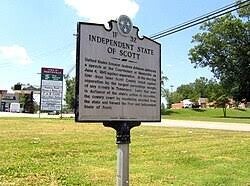
After the Confederacy came into being, in some regions of the South a very different secessionist movement emerged…one that sought a counter-secession from the southern states back to the Union. When Tennessee moved to join the Confederacy Scott county in the state’s north voted overwhelmingly not to secede from the Union – 521 to 19, and responded to the act of state secession by unilaterally declaring itself independent from Tennessee (the “Free and Independent State of Scott”). The Tennessee governor reacted by despatching a contingent to the fractious county to deal with the rebels(sic) but it’s efforts proved fruitless in apprehending any of the county’s leaders. The Tennessee authorities then basically forgot about Scott county. During the Civil War the county became a no man’s land as guerrilla warfare and lawlessness prevailed, with blue and grey soldiers engaging each other in minor skirmishes. After the war Tennessee did not formally re-admit the recalcitrant county into the state, while continuing to treat Scott County as a constituent part of the state like any other county within its jurisdiction. This oversight was not officially rectified until 1986, some 120-plus years after the war had ended.
Nickajack is a mountainous region lying within the Tennessee River Valley, it straddles eastern Tennessee and northern Alabama and includes a tiny strip of Georgia territory. As was the case with Scott county, slavery was not a key issue for Nickajack’ population which comprised in the main Ulster Scots. The territory’s terrain was not suited to large plantations and slaves and slave-owners were few. Nickajack’s pro-northerner sympathies prompted demands that it be granted independent statehood. The Nickajack (and the Scott) populations argued that the precedent had been set by the eleven states in seceding from the Union unconstitutionally, therefore they, being loyal unionists, were equally justified in acting to secede from the usurping Confederacy. Nickajack’s attempt to secede and rejoin the Union however lacked organisation and materiel substance and it’s demands ultimately went unheeded and the movement quickly lost momentum and dissolved.
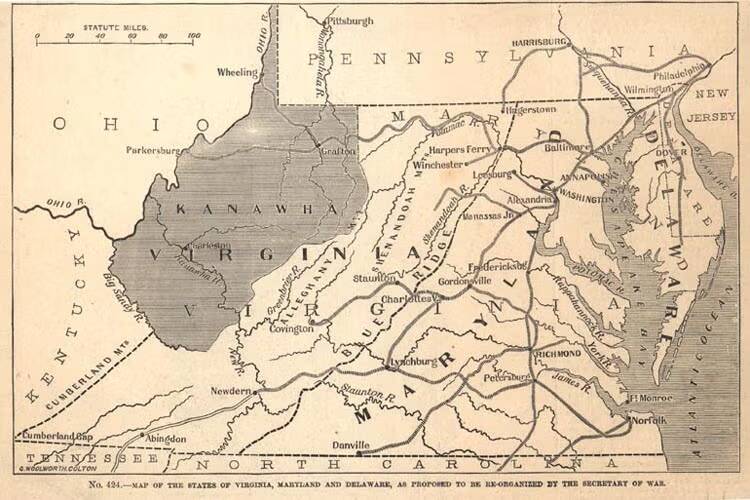
It’s instructive to compare the failure of the Nickajack and Scott blocs to attain their secessionist objectives with that of the West Virginians who succeeded in severing themselves from Confederate Virginia at the same time. West Virginia’s path to statehood during the Civil War rested on a well-planned and coordinated campaign. Settlers in the western part of Virginia, largely yeoman farmers and Scots-Irish Protestants, were opposed to the slave-based economy of the east and loyal to the Unionist cause. Uniting into a political block based in Wheeling, they projected the western regiona⃞ as the “Restored Government of Virginia, gaining legal recognition from President Lincoln and Congress and the protection of the occupying Union army. Washington’s support for the West Virginians’ aspirations also had a geo-strategic component, the military’s presence in the new state ensured the protection of the vital Baltimore and Ohio (B & O) Railroad.
Conversely, the people in the Appalachians hoping to secede from the South lacked West Virginia’s legal recognition. The pro-northerners in Scott county and Nickajack wanting to reunite with the Union were viewed as no more than localised and unauthorised movements of resistance to Confederate rule…their efforts to break away from the slave states merely symbolic acts of defiance. Geography was also against them, whereas West Virginia sat on the border line with the Union, the Scott and Nickajack would-be secessionists were too far away from the North, too embedded within the Confederacy to realise their aims.
⍔⍃⌼⍄⍃⌼⍄⍃⌼⍄⍃⌼⍄⍃⌼⍄⍃⌼⍄⍃⌼⍄⍃⌼⍄⍃⌼⍄⍄⍔
a⃞ when first proposed for statehood the new state was to be called “Kanawha”
Bibliography
‘Scott County Tennessee’, http://scottcounty.com
‘Why There’s a West Virginia’, Matthew Wills, JSTOR, Sept 8, 2017, www.daily.jstor.com
‘Populist Hillbillies vs. Fake Lordlings: The Almost-States of Franklyn, Nickajack and Transylvania’, The Political Orphanage, (Podcast, July 2, 2025), Andrew Heaton, www.open.spotify.com
19 May 2026
⇩ West Virginia aka “Kanawha”

Create Your Own Website With Webador