

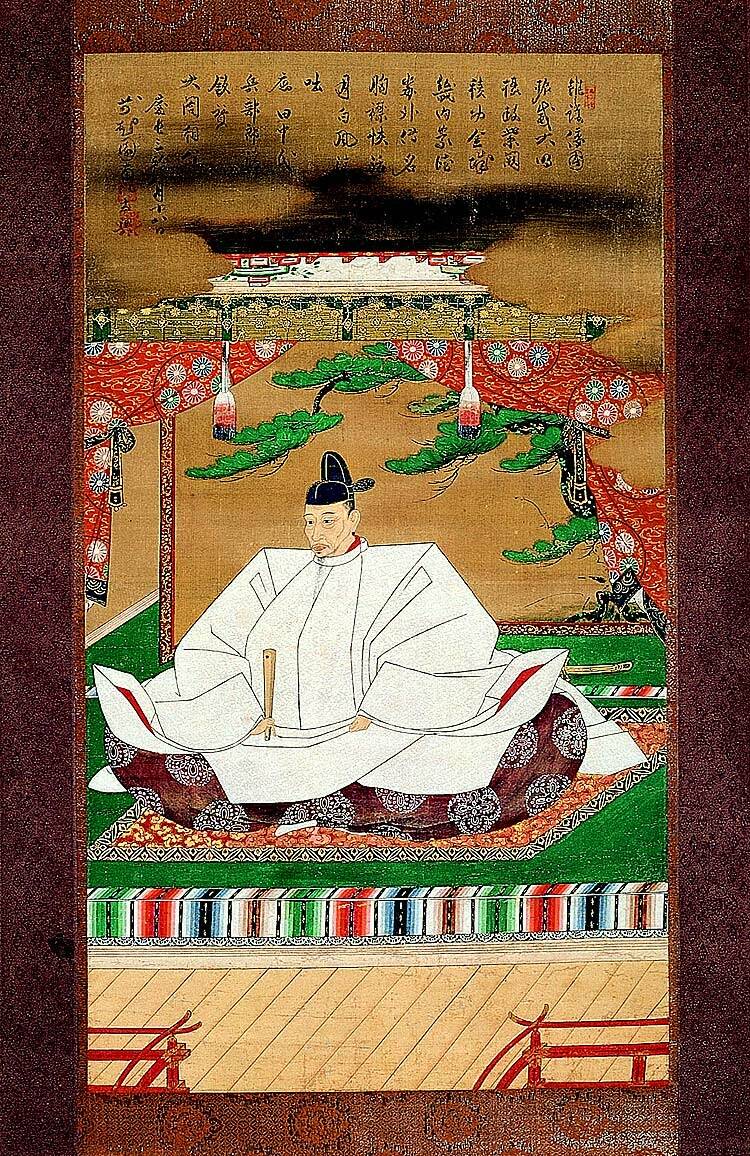
Defacto ruler of Japan Hideyoshi ➲
MMXXVI~originally published 21st June 2026
785 words
⧒⧓⧕⧒⧓⧔
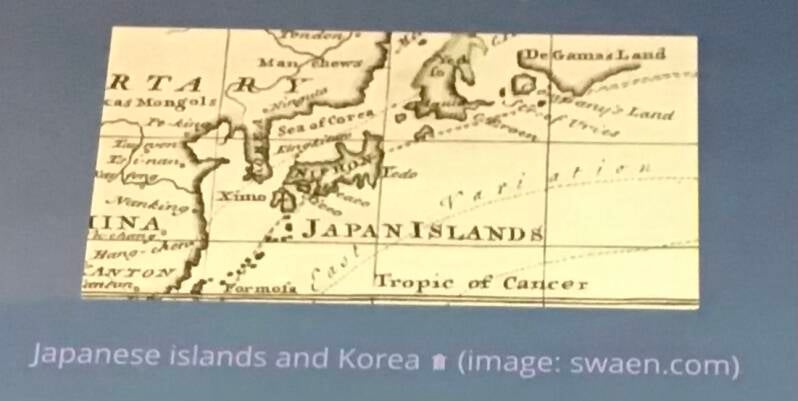
The scars of imperial Japan’s aggressive 20th century foreign policy, ruthlessly expanding unrestrained into East Asia, still sit in the memories of Korean and Chinese people. Many East Asian states including Taiwan, Singapore, China and Korea, felt its brutal colonising imprint leading up to and during WWII. But Japan’s ambitious thrust into Greater Asia had precedents dating back over three centuries earlier. In 1592 Toyotomi Hideyoshi, powerful unifier of Japan’s warring daimyō (feudal lords) and the country’s de facto ruler, spearheaded the Japanese drive into the territories of it’s East Asian neighbours. Deciding that the Korean Peninsula was the obvious stepping-stone into the vast lands of Manchuria (North-East China), Hideyoshi first issued a demand that the “Great Joseon State” submit to becoming a vassal state of Japan. Upon Emperor Seonyo’s refusal to acquiesce, Hideyoshi launched an invasion of the Korean peninsula with a huge force of 158,800 men. The dictator did not lead his army personally, staying at home while appointing three feudal lords (including the brilliant general, Kato Kiyomasa) as the expedition’s senior commanders. Hideyoshi’s imperial agenda, the military assault on Korea had a shrewd political purpose for the Japanese autocrat. By offering up the incentive of new land for the sengoku daimyō, (his rivals in the civil wars), he could keep the daimyō and samurai warriors occupied abroad, thus negating any threat they might pose to Hideyoshi’s hold on power if they were still in Japan𝟏⃟.
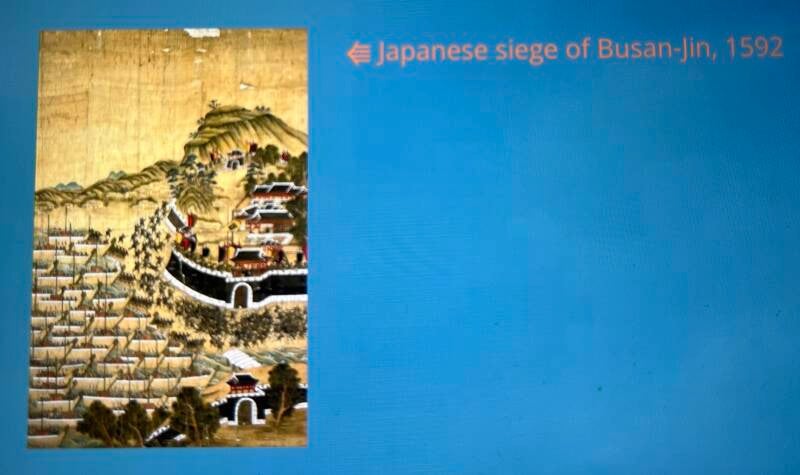
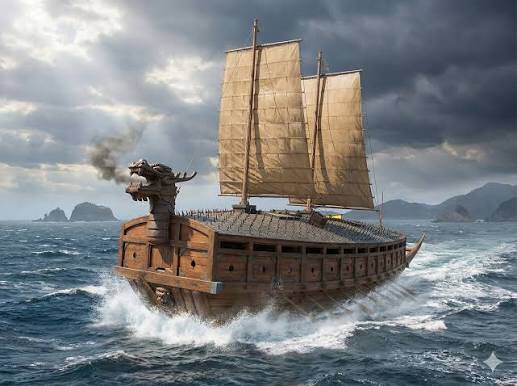
At the onset of invasion the Koreans were as ill-prepared for conflict was the Japanese were well-prepared. The poorly-organised Korean forces were no match for the well-led Japanese with their modern firearms, discipline and battle-hardened troops…consequently, the Japanese swiftly captured Busan and Seoul with only token opposition (later taking the principal northern town of Pyongyang too). The Koreans were in disarray with the royal court fleeing north to the Chinese border. Initially victorious, and with the Korean capital razed, the Japanese forces drove north in pursuit. What ultimately stopped their military advance and turned the tide of the war was a combination of factors: the entry of Ming China into the conflict (Emperor Wanli fully committed to defending Korea as a client state of the empire); Korean admiral, Yi Sun-sin, counter-balanced Japan’s supremacy on land with his superior naval warfare, greater familiarity with the local coastal waters and the use of highly innovative ironclad vessels nicknamed “Turtle ships” (Kobuk–son) (consequently Japan could never properly secure the vital supply lines of it’s forces; the Korean forces, after early defeats, regrouped, became rural-based and fought a more effective, guerrilla-style warfare (‘Failure of the 16th Century Japanese Invasions of Korea’, Shawn Ford, (1997), www2.hawaii.edu).
There was a short halt to the hostilities in Korea in 1596 while the Mings and Hideyoshi parleyed over a resolution to the conflict. The peace talks however failed and the war resumed in 1597…confined mainly to the south of the peninsula it developed into a stalemate. With Chancellor Hideyoshi’s death in 1598, the Japanese leadership became divided and the army withdrew from Korea and returned home. Historian Kenneth Swope characterises the wars by the oriental analogy, “a dragon’s head and a servant’s tail”, ie, for Japan the invasion aimed at forging a “Greater Japan” in the region had “an impressive beginning but with no real ending” (Kenneth Swope, “A Dragon’s Head and a Serpent’s Tail”: Ming China and the First Great East Asian War, 1592–1598, (2012)) 𝟐⃟.
Consequences of the wars were massive, thousands of lives lost, the agriculturally-dependent Korean economy in ruins, the country lost many cultural treasures, stolen and shipped back to Japan by the invading army. For China, the economic burden of the wars were crippling, weakening the Ming government and contributing to the decline and eventual cessation of the Ming Dynasty in 1644. In Japan Tokugawa Ieyasu succeeded the late Hideyoshi after a short power struggle, establishing the Tokugawa Shōgunate which ruled Japan until 1868 (‘Japan Invades Korea’, Sam Vermeersch, EBSCO, 2022, www.ebsco.com).
𖣯𖣯𖣯𖣯𖣯𖣯𖣯𖣯𖣯𖣯𖣯𖣯𖣯𖣯𖣯𖣯𖣯
𝟏⃟ in addition to this, Hideyoshi envisioned the rich economic gains to be had from this transinternational venture, which he called Kara–ira (“go into China”) – access to trade in silk and other lucrative mainland goods
𝟐⃟ Swope demurs from the view of the Japan v Korea/China conflict as no more than a small, local skirmish, seeing it rather as a genuine international war, instancing the number of troops put in the field in the Korea invasions dwarfing that of the Spanish Armada War in Europe taking place concurrently with it
𖣘 Some historians distinguish the two phases of the Japanese invasion of Korea by classing them as separate wars — the Imjin War (1692–96) and the Chôngyu War (1597–98).
⇩ Imjin War siege (image: gwiks.elliott.gwu.edu/)

⇩ Korean kobuk-son (image: facebook.com)
𐰢 𐰢 𐰢 𐰢 𐰢 𐰢 𐰢 𐰢 𐰢 𐰢 𐰢 𐰢 𐰢 𐰢 𐰢 𐰢 𐰢
21 June 2026
Create Your Own Website With Webador