



MMXXVI~originally published 10th June 2026
578 words
◘€◙€◘
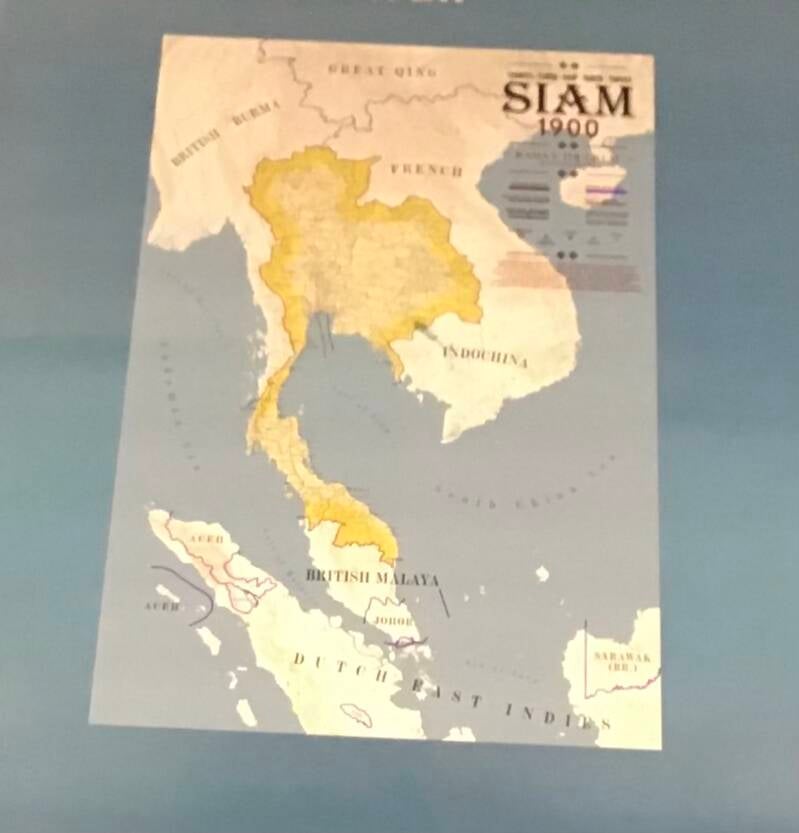
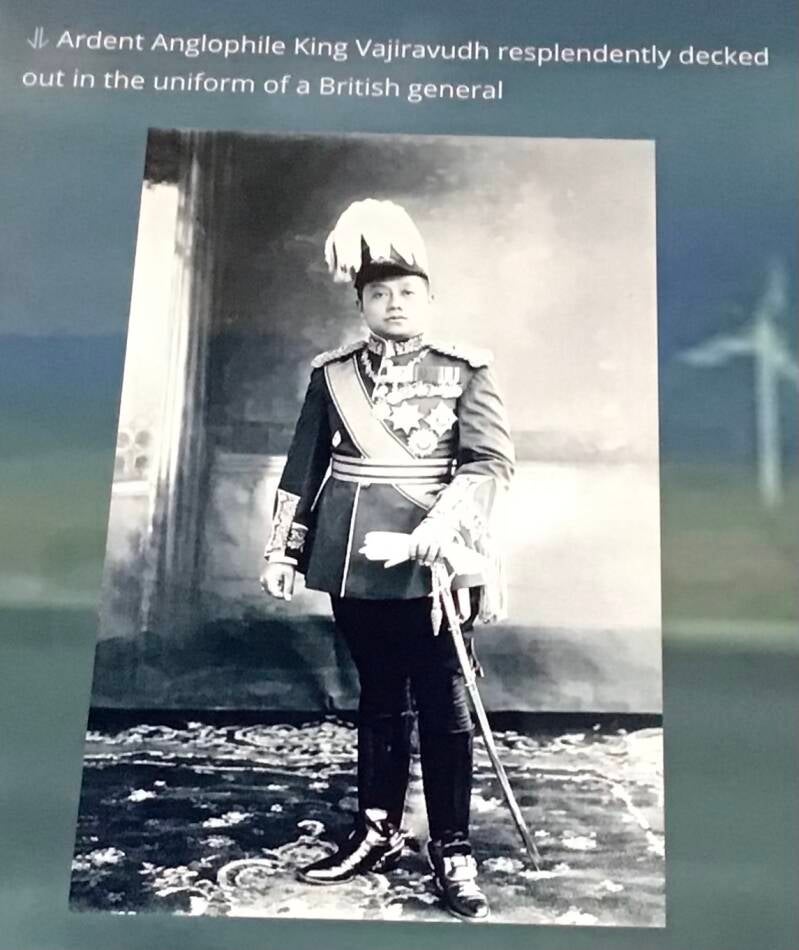
It is no secret that the United States was a “Johnny come lately” to the global conflagration of the First World War𝓐, committing itself to the Triple Entente’s side only in the fourth year of the conflict, in April 1917. Not-so-well known is who else declared war on Germany and Austria-Hungary in 1917? Few would speculate the answer might include the Kingdom of Siam (modern-day Thailand), a most unlikely participant in the Great War, given that it’s location in Southeast Asia was far removed from any theatre of war in the conflict and it was not threatened by any of the warring combatants. Nonetheless, in July 1917, Siam led by its monarch King Vajiravudh reversed its initial wartime neutrality and declared war on the Central Powers𝓑.
The US’s entry into the war to some extent did influence Siam’s decision, which was a strategic and political one. US president, Woodrow Wilson, in announcing America’s entry, stressed that, in response to the atrocities committed by the German military, his country was “fighting for civilisation”. By joining the Allies Siam was looking to make more than a tentative step onto the world stage, intent on demonstrating to the major powers that it was a modern and civilised state. Siam had more concrete objectives as well, by choosing what it increasingly thought was the winning side, it hoped that post-war it could renegotiate the Unequal Treaties it had with Britain, France and the US𝓒.
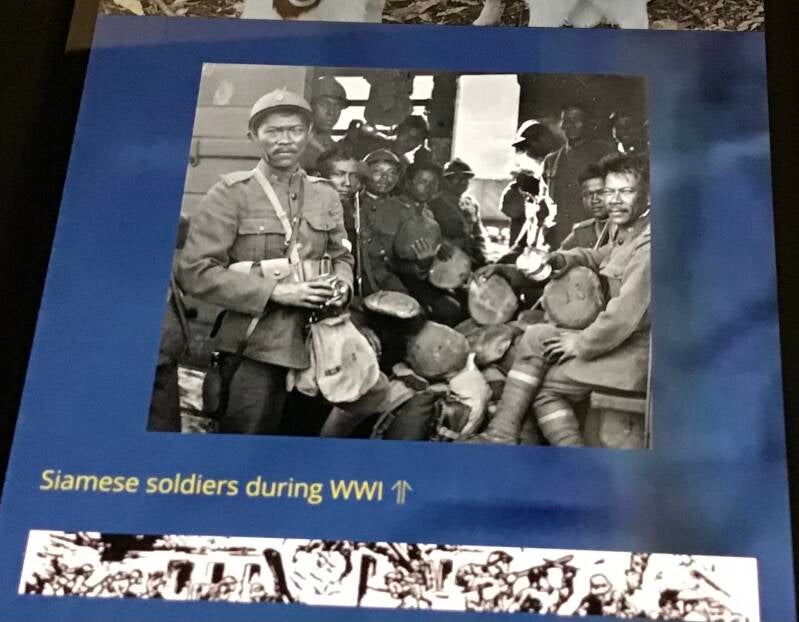
Upon entering the war Siam immediately moved to seize German assets (especially merchant ships) within Siamese waters, as well as interning enemy nationals within the country. The kingdom adopted a new, tricolour, flag (the Trairong), which incorporated the colours of their new allies. In early 1918 a volunteer Siamese Expeditionary Force—comprising nearly 1,300 men including aviation personnel and motor transport troops though lacking modern equipment and artillery—reached the European war zone. Its military role in the war was not a significant one (sustaining no casualties from combat𝓓) and was blighted by the contemptuous and racist treatment its troops received from some of their fellow allies. However, after the Armistice was declared, by being on the victors’ side Siam earned a seat at the Paris Peace Conference, became a founding member of the nascent League of Nations and was rewarded with the eventual revoking of the Unequal Treaties (by 1925) and the restoration of full national sovereignty.
🏷🏷🏷🏷🏷🏷🏷🏷🏷🏷🏷🏷🏷🏷🏷
𝓐 and for that matter the Second World War
𝓑 prior to Siam’s decision to join the conflict the state’s elites were split between a pro-British faction (the king) and a pro-German faction (some royal princes)
𝓒 for their part London and Paris were well-disposed to Siam joining them, as it would alleviate concerns they had about Germany using Siam to conduct spying activities on the nearby colonies (British India and Indo-China)
𝓓 19 Siamese troops did die during war service but mostly as a result of the Spanish Flu outbreak
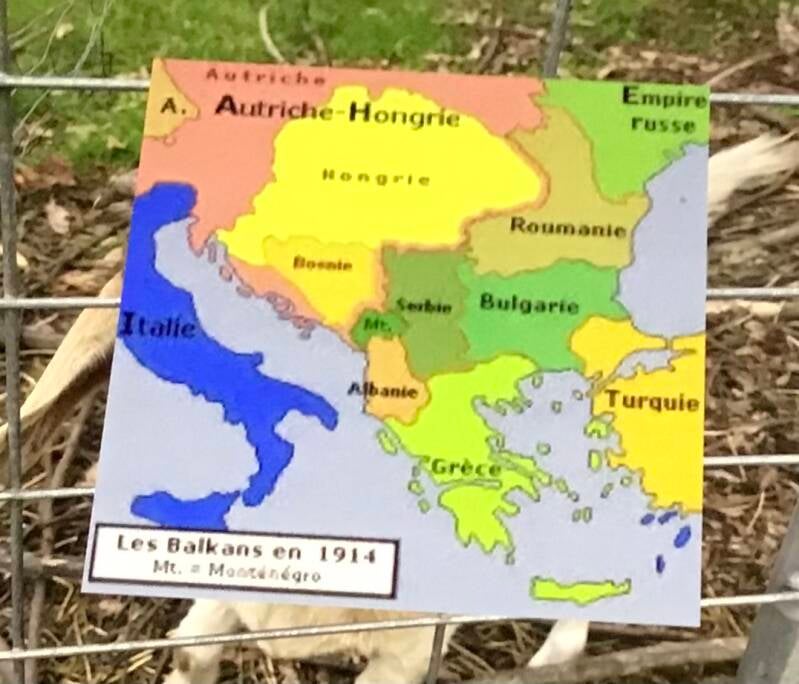
From observers to participants: Siam, far away from the cauldron, was not the only small state to come late to the global conflict. A number, with the war on their very doorsteps picked their moment to enter – including Italy, Portugal and Greece (➙ all on the side of Allied Powers), Bulgaria and Romania (➙ both Central Powers). Their motives were to a lesser or greater degree mixed but mainly a desire to extend their territorial ambitions, to defend their existing overseas territories against one or other of the powers, etc.

Create Your Own Website With Webador