


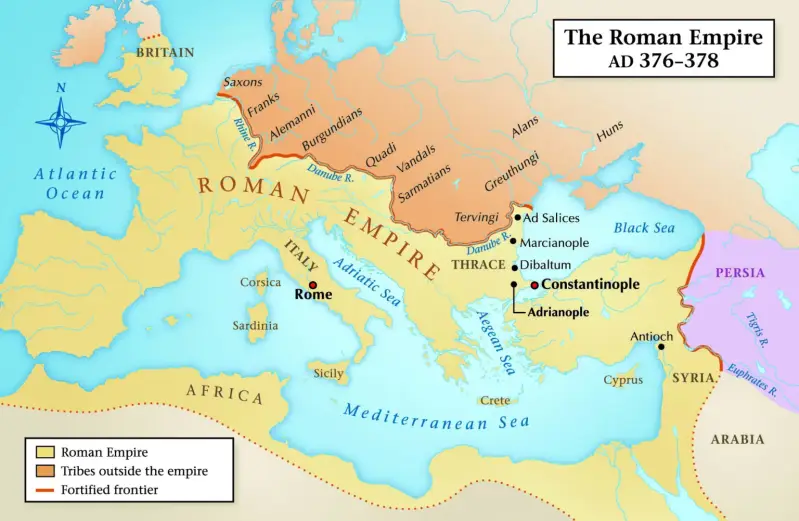
Map: Baker Vail/historynet.com
MMXXVI~originally published 6th July 2026
528 words
𖡟 𖡦 𖡟
Massive influxes of refugees making the perilous trek to Europe from Africa and the Middle East have been an all-too-common trend of regional upheavals in the 21st century. Though a topical activity synonymous with the modern world, asylum-seeking on a large-scale across the known world has an ancient history. In the year AD 376 a very large gathering of Gothic refugees—fleeing from the deadly onslaught of Huns from the east—assembled in massive numbers🄰 on the Danube River on the Roman Empire border. The Goths (an ancient tribe originating in southern Scandinavia) petitioned the Eastern Roman Emperor Valens for asylum, pledging loyalty and service to the emperor, which he acquiesced to while setting hard terms – the Gothic warriors had to surrender their arms upon entering Roman territory.
Under the terms of the receptio🄱, the Romans were required to sell food and provisions to the huge horde of Goths, but coping with the exceedingly great number of refugees was beyond them. Compounding this, the corrupt Roman officials in charge reneged on the deal, housing the desperate and starving Goths into crowded camps in northern Thracia and forcing many to sell their own children into slavery. This drove the Goths under their (ludex) leader Fritigern to unite with other displaced tribes and revolt against the abusive treatment dished out to them by the Romans (Gothic War 376–382). Emperor Valens personally led his Eastern army against the Goths to try to quash the rebellion, engaging them at the Battle of Adrianople (378) (N.W. Anatolia) which turned into one the most complete military disasters ever suffered by the empire on its own soil. Valens himself was slayed, along with two-thirds of the Eastern army. The Adrianople debacle is viewed by many Classicist historians as a turning point, the genesis of Rome’s decline and ultimate fall. After Rome’s crushing defeat at Adrianople the floodgates opened to wave after wave of unstoppable invasions by “Barbarians” (ie, foreigners).
▀▀▀▀█▄▄█▀▀█▀██▄█▄▄▀██▄▄█▀▀▀▀
🄰 Greek historian Eunapius, a contemporary of the time, put the figure at 200,000 including civilians, however most modern scholars set their estimates within the range of 90,000 to 120,000 displaced Goths
🄱 the Latin word used by the Romans to describe the integration of asylum-seeking groups into the empire
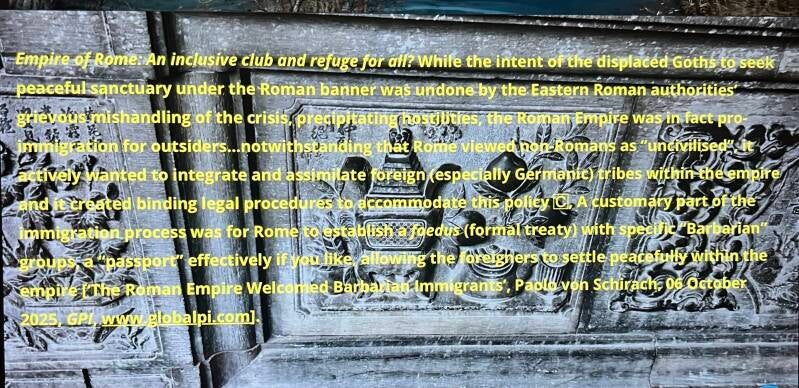
🄲 the admitted Barbarians were granted rights (eg, access to land, retain their own laws and culture) and had obligations (provide military service) and there was the carrot of (eventually) obtaining Roman citizenship dangled before them
06 July 2026
⇓ The pivotal Battle of Adrianople AD 376 (source: Mad Mac’s Attic)
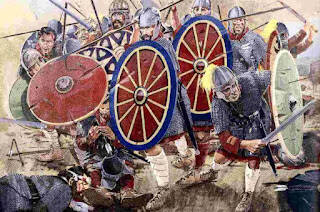
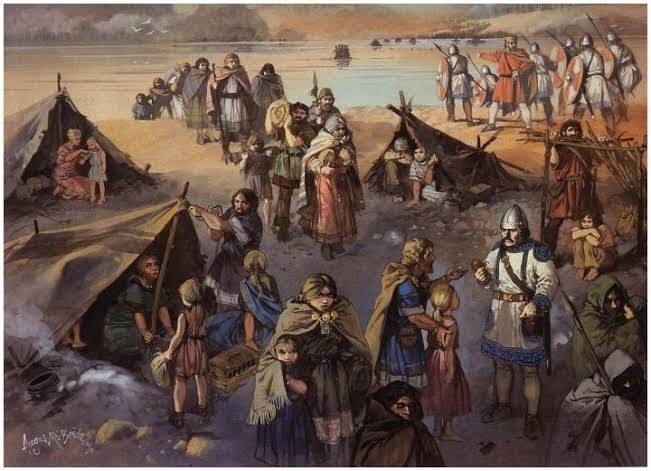
Gothic tribes seeking refuge across the Danube ⇑ by Angus McBride
Create Your Own Website With Webador