

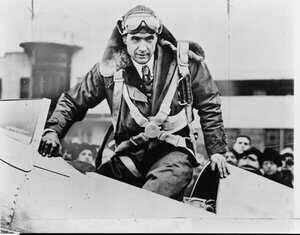
⇧ Howard Hughes, playboy aviator-turned-movie mogul (photo: Courtesy: LOC NYWTS Photograph Collection)
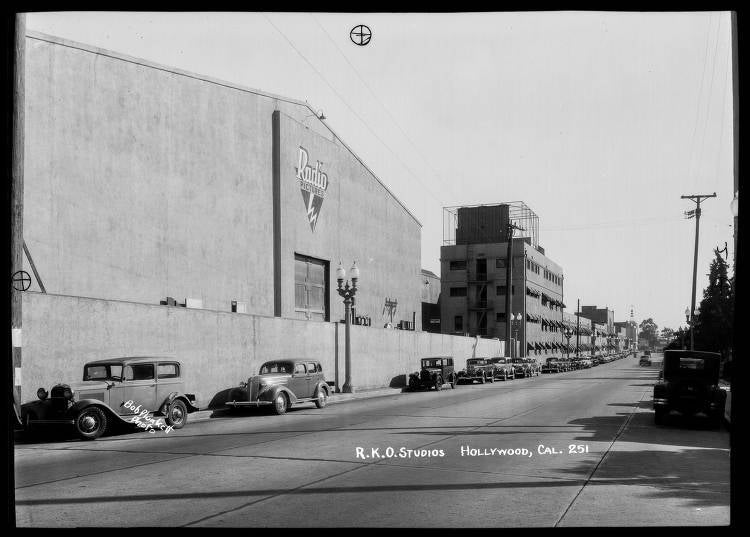
Title: RKO Studios, Hollywood, Cal
Date: 1932
Collection: Photographs
Owning Institution: Huntington Library
Source: Calisphere
Date of access: August 2 2026 20:38
Permalink: https://calisphere.org/item/49204b753ad51cbcd90b
674 words
🎞️ 🎞️ 🎞️
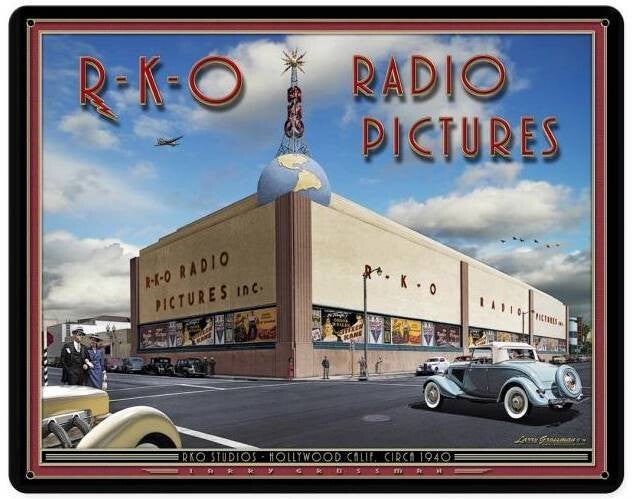
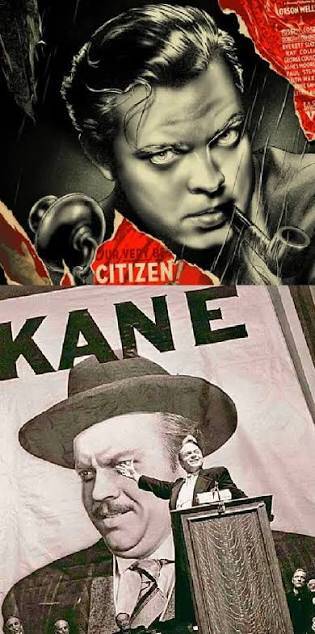
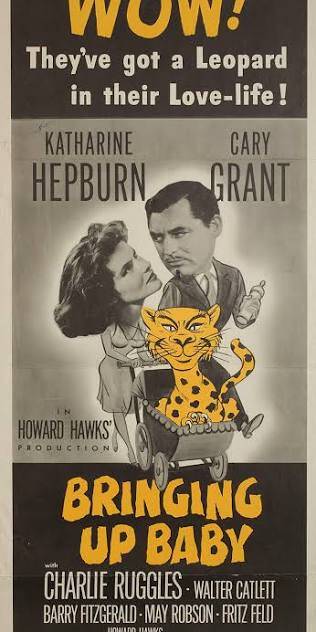
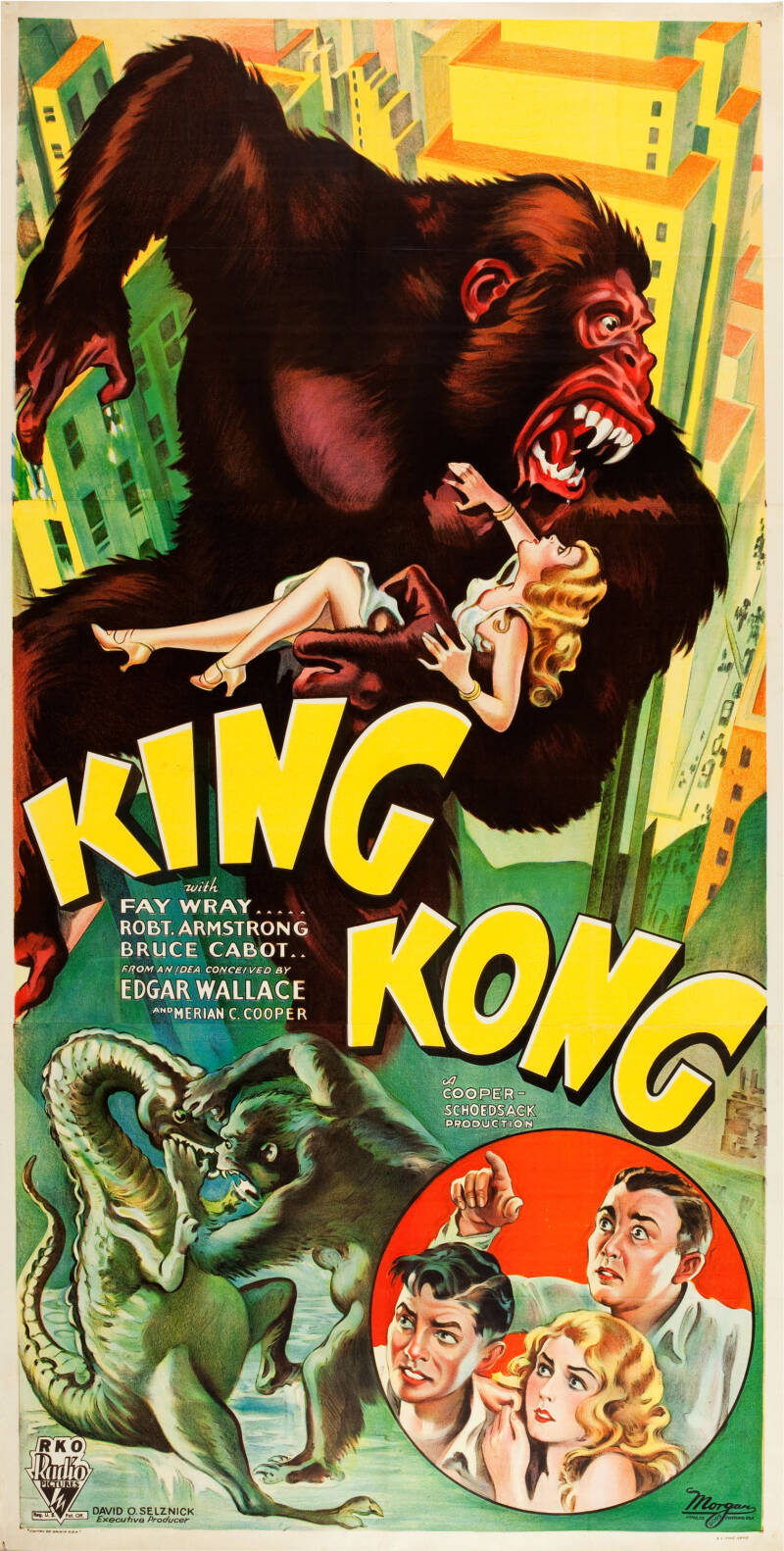
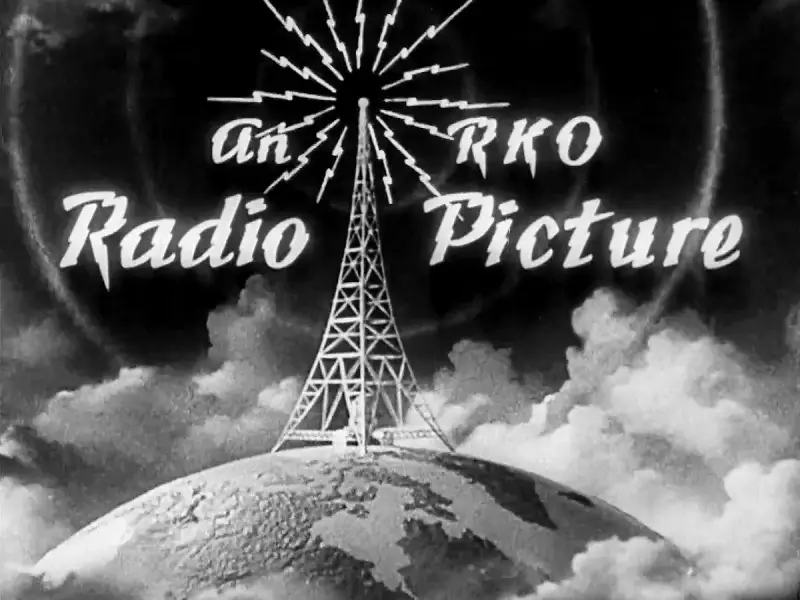
During the nostalgia-encrusted “Golden Years of Hollywood” RKO❶ Pictures was the one of the “big five” movie studios❷. In the 1930s and 1940s it turned out a string of notable films like Cimarron, Bringing Up Baby, The Hunchback of Notre Dame and The Best Years of Our Lives, along with a few absolute classics such as King Kong and, holding pride of place, Citizen Kane. It’s stable of players included the cream of screen acting talent, Cary Grant, Kathrine Hepburn, Frank Astaire and Ginger Rogers, and Robert Mitchum. In the war years of the early 1940s producer Val Lewton made a legendary series of low-budget atmospheric, psychological horror B–movies for RKO, including Cat People, I Walked with a Zombie and The Body Snatcher. But then it all went horribly pear-shaped, by the mid to late 1950s RKO was no longer even making motion pictures. What went wrong? If you were to reduce it to a word (or more precisely two words)…they would be "Howard Hughes".
Billionaire Texas business tycoon and aviator Howard Hughes acquired control of RKO in 1948 and pursued an approach to the studio that was anything BUT hands-off. The increasingly eccentric (alarmingly so) Hughes imposed an erratic regime of personal micro-managing, constant inference in productions, neglect of studio operations, engendering an overall pattern of corporate instability at RKO, resulting in a high turnover of executives and an inevitable drain of top talent.
When the McCarthyist purge got into full swing in the early Fifties, Hughes, a rabid anti-communist, applied his energies enthusiastically to the hunt for “reds” in Hollywood. As his paranoia-induced impulses became even more egregious, he arbitrarily cancelled four pictures (for being a allegedly “anti-American”), tore up 11 new scripts and started laying off staff at the studio. Some of the actors chosen for productions were vetoed by Hughes for being “too tall”, which apparently was HH code for “commo suspect”. All of which led to a backlog of 24 unreleased films costing the studio $39.5 million. Some contemporary observers suggested the communist clean-out was a screen to deflect scrutiny away from a failing business model – RKO productions under the stultifying Hughes were way over schedule and notoriously costly (no new pictures for a period of three months in 1952) (‘Was Howard Hughes seizing on the Red scare to cover up RKO’s ills?’, Cinema: Trouble at RKO, 21 April 1952, www.content.time.com).
Hughes’ sabotage of his own studio continued unabated, a flagrant waste and destruction. RKO film-makers were subjected to the billionaire’s meddling in projects, altering scripts and changing film endings, necessitating costly reshoots. Late night phone calls to subordinates became a regular occurrence, demanding costume changes for actresses and other alterations (by now Hughes had become increasingly reclusive and was suffering from acute insomnia and deafness)❸ (‘Howard Hughes: Tales of a priapic producer’, Peter Bart, Variety, 23 September 2001, www.variety.com).
Hughes’ excesses were epic, he treated star actresses as if they were his personal property, in particular he had a grotesque obsession with Jane Russell—and more anatomically precisely, with her cleavage—which dates to prior to his RKO phase, to 1940 when he first selected the 19-year-old to headline his much hyped production of The Outlaw, described as a “proto-exploitation Western” (‘You Must Remember This’ (podcast, ‘The Many Loves of Howard Hughes’, ('You Must Remember This' podcast, 14 October 2014).
Hughes’ chaotic and capricious leadership of RKO prompted Walt Disney to end it’s distribution deals which had provided very lucrative for Hughes’ studio, another financial blow to RKO, already in debt from years of declining box office returns. In 1955 Hughes sold RKO to the General Tire and Rubber Company. Two years later the RKO lots were acquired by Desilu Productions, an independent television producer, the culmination of a dismal end for the RKO story.
◕◕◕◕◕◕◕◕◕◕◕◕◕◕◕◕◕◕◕◕◕◕◕◕◕◕◕◕◕
❶ Radio–Keith-Orpheum
❷ the other four being MGM, Warner Bros, Paramount Pictures and 20th Century Fox
❸ Hughes never publicly set foot on the RKO lot, all his interventions were phoned in from his office, home or from motels he used
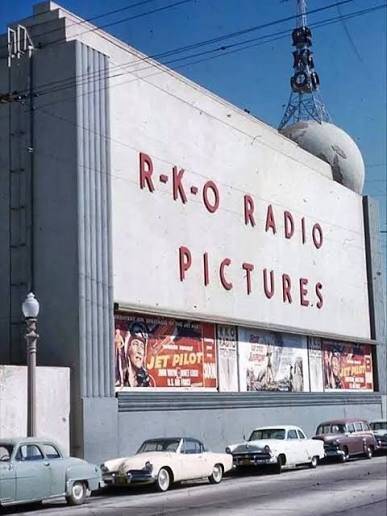
RKO, 1957 ⇧

Create Your Own Website With Webador