

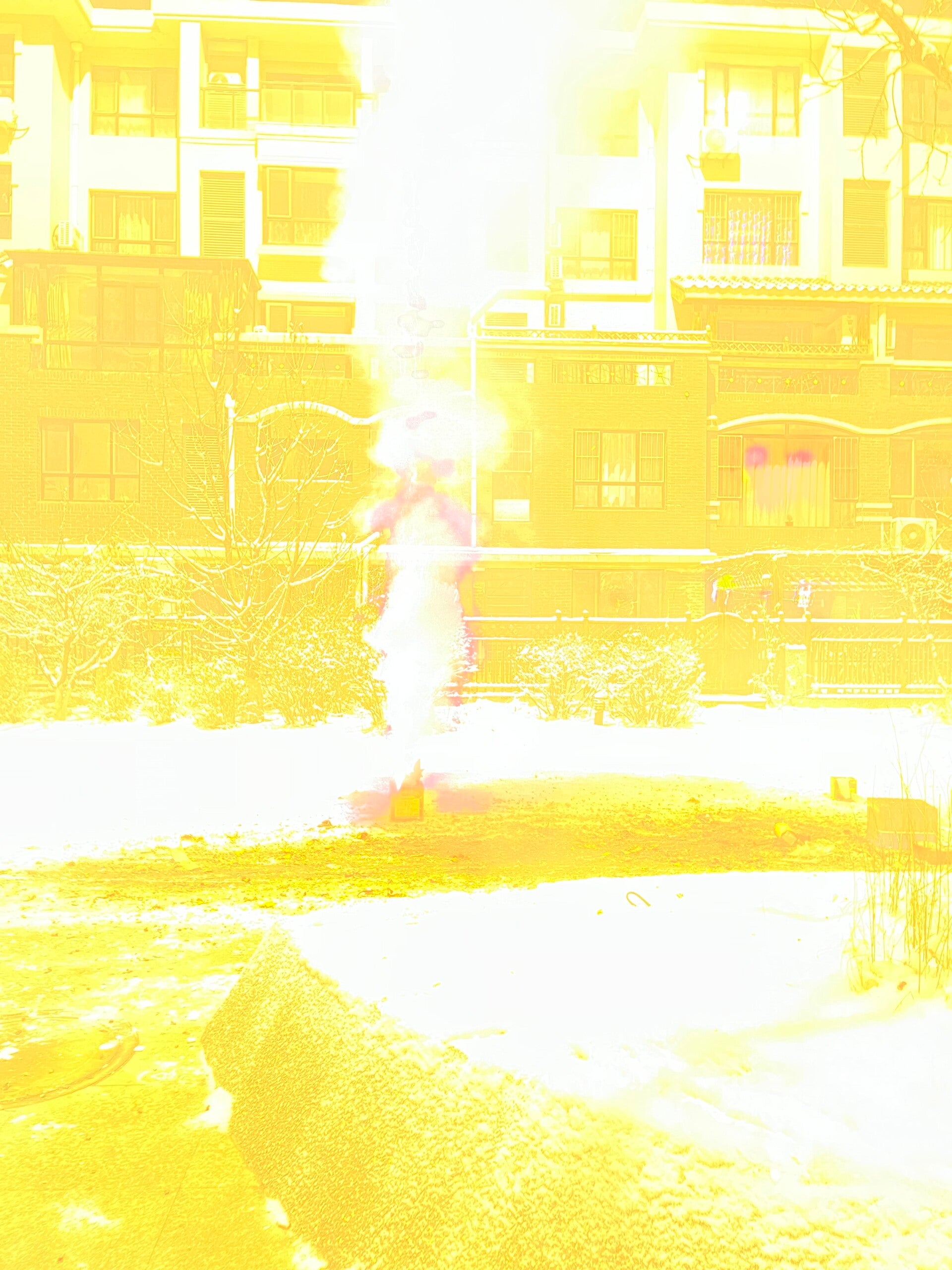
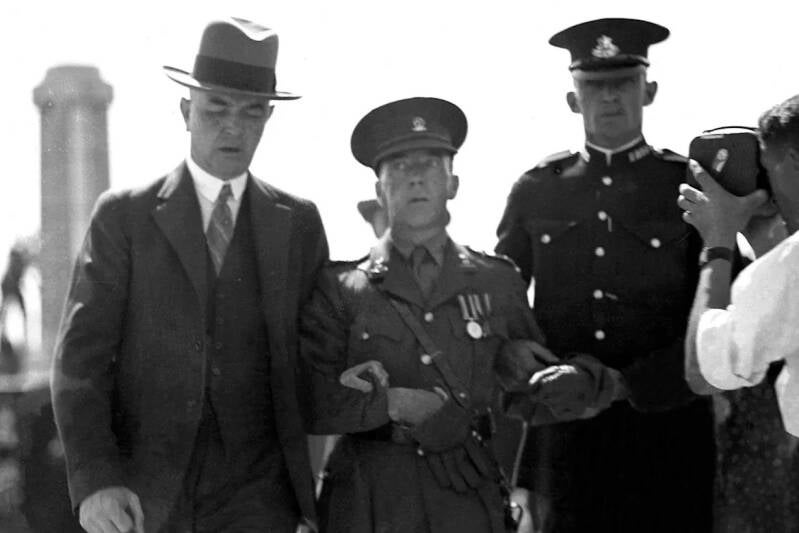
New Guardsman Francis de Groot, under arrest for illegally cutting the ribbon at the opening ceremony of the Sydney Harbour Bridge, preempting Premier Lang (1932) ⇩
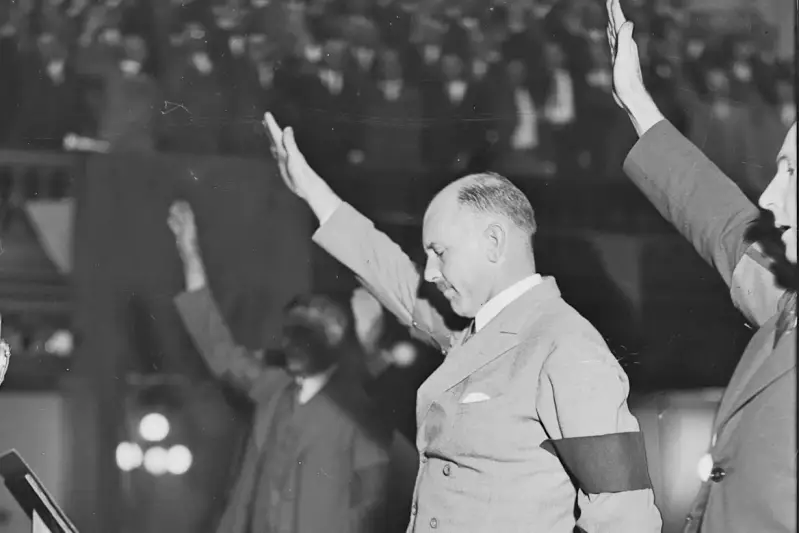
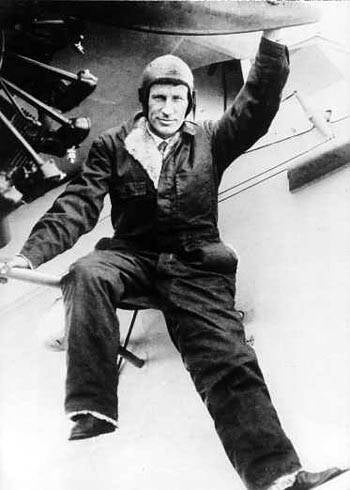
⇧ Eric Campbell, New Guard “führer” ⇧ Kingsford Smith, one of the movement’s celebrity members
1100 words
ଳ ଳ ଳ
With the world spotlight fixed on Adolph Hitler and Benito Mussolini in the 1930s and 1940s, wannabe Nazi and fascist leaders and copycat far-right fringe parties became a common presence on the international political landscape of the day. This fascist infestation was heavily concentrated of course in Europe, but by no means confined to it. Authoritarian fascist movements emerged in the interwar period in North America, Central America, South America the Middle East, Africa, and even faraway Australia cultivated its own homegrown variants inspired by the Italian and German prototypes.
Self–appointed moral guardians with guns
The fascist clone party best remembered in Australia was a shadowy fringe organisation known as the New Guard. Formed by former WWI army officers in 1931 from the splintered remnants of a covert group, the Old Guard. The New Guard’s leader and driving force was a North Shore (Sydney) solicitor, (Colonel) Eric Campbell① who organised the party as a paramilitary force (“the secret army”). The core of the movement’s ideology comprised an unflinching loyalty to the crown and the British Empire, extreme anti-communism; suppression of any “disloyal and immoral elements in government, industrial and social circles” (personified by the group’s antipathy to the labour movement and fiercely determined opposition to state premier, Jack Lang, the New Guard’s nemesis); “sane and honourable government” throughout Australia; abolition of machine politics; maintenance of the full liberty of the individual (‘The New Guard’, NAA – National Archives of Australia, www.naa.gov.au).
At its strongest point the New Guard (henceforth NG) commanded approximately 50,000 members in NSW, including some prominent Australians of the day (pioneering aviators Charles Kingsford Smith and Charles Ulm, mayor of North Sydney Hubert Primrose and leading business families in Australian industry and agriculture, the Patricks and the McArthur Onslows).
For a group aspiring to be a mass movement in Australian politics, NG was decidedly not inclusive, women were excluded from membership, the party remained predominantly a middle-class organisation (mainly comprising urban professionals and small businessmen), although worker membership was not negligible. Geographically, NG was primarily based in New South Wales (and mainly active in Sydney).
By late 1931, NG, disillusioned with progress via the parliamentary path, adopted a more violent, aggressive strategy against the left, engaging in street fights in Sydney with communists and trade unionists, disrupting their political meetings and so on. New Guardsmen started to display some of the trappings of fascist parties (the uniforms, the Nazi salute, ID badges). In 1932, several member of a breakaway NG faction, the clandestine Fascist Legion, attacked and bashed Jock Garden (a prominent communist trade union official and close associate of Premier Lang) with wooden clubs②. The ensuing public outrage discredited NG and triggered a raft of member resignations from the organisation.
The other development that undermined NG’s credibility in the early months of 1932 involved media speculation and intelligence reports which suggested NG via its covert Fascist Legion was plotting the overthrow of the Lang Labor government, the plan being for the Legion to kidnap Premier Jack Lang and his cabinet and incarcerate them in the old disused Berrima Gaol (The Canberra Times, 11th May 1932). This prompted NSW police to dramatically upgrade their surveillance and monitor of the group's leaders more closely.
A week after the Garden attack Premier Lang was dismissed by the NSW state governor Philip Game in a constitutional coup…the removal of NG’s enemy number 1 undercut the far-right party’s momentum, which coupled with signs of improvement in the economy, set in motion an inexorable drift of the organisation (and Campbell) into obscurity. In 1935 Campbell ran as a “Centre Party” candidate for a state seat but was unsuccessful and soon after disappeared from the political scene.
⁌⁍ ⁌⁍ ⁌⁍
White Army, Red faces
While a lot of attention falls on NG whenever the subject of fascist-oriented (semi-fascist?) groups in Australia during the Thirties is raised. Spurred by the economic devastation of the Depression and the growing prominence of communism, there was a proliferation of sketchily-known ultra-right fringe movements active during the period. In Victoria there was the Mallee-based “White Army”, a secret group of armed right-wing vigilantes who in 1931 mobilised with the intent of quashing an impending Bolshevik insurrection which never eventuated. The White Army’s take on the contemporary political situation was particularly quixotic – it’s sectarian (Protestant) members believed that the communists were in cahoots with Catholics and the unemployed and that, when the “revolution” starts, nuns were going to arm the rebels with service rifles which they had supposedly secreted inside convents(?)
⁌⁍ ⁌⁍ ⁌⁍
Australia First Movement: Fifth columnists
Whereas NG saw itself as “patriotic” in the sense of being loyal to Britain, Australia First (AFM)’s ultra–nationalism was directed towards a rejection of all things British, politically and culturally. Founded in October 1941 by former communist and one-time Rhodes scholar Percy Stevenson and suffragette turned nationalist Adela Pankhurst, and bankrolled by businessman William Miles, AFM③ stood for anticommunism, isolationism, preservation of a White Australia and enunciated a strain of antisemitism. AFM attracted a number of famous Australians such as writers Xavier Herbert, Miles Franklin and Eleanor Dark…some of its members were decent, well-meaning but politically naive and gullible in the view of one researcher (Barbara Winter, Australia–First and The Publicist (2005)).
With the world war in full swing AFM came under the watchful eye of Australian authorities for it’s anti-democratic overtures, and most pointedly it’s advocacy of an alliance with the Axis powers. AFM’s support for imperial Japan seems a bit odd given its white exclusiveness stance but possibly they were banking on a Japanese invasion as the means to break Britain’s stranglehold over Australia. Things came to a head in March 1942 when four members of a West Australian AFM cell in possession of an incriminating document were arrested by CIB detectives. The document revealed a plot to sabotage Australian infrastructure to aid the Japanese campaign against the Allies, and to assassinate prominent local politicians; a welcome to the Japanese forces as liberators from British imperialism (and advice on creating a puppet government). This explosive revelation prompted treasonous charges and even though the WA cell only had tenuous links with the Sydney HQs of the movement, 16 prominent members of AFM including Stephenson were interned for the duration of the war on national security grounds, leading to the dissolution of AFM barely five months after it’s creation.
ᨃᨓᨑᨐᨏᨎᨃᨓᨑᨐᨏᨓᨑᨐᨎ
① Campbell, a massive Mussolini fan, once described himself as “fascist to his fingertips”
② the Fascist Legion thugs wore masks and black Ku Klux Clan-like robes
③ aka the League of Security and Safety
The head of the secret "White Army" allegedly was the autocratic Gen. Thomas Blamey, chief commissioner of Victorian police ⇩
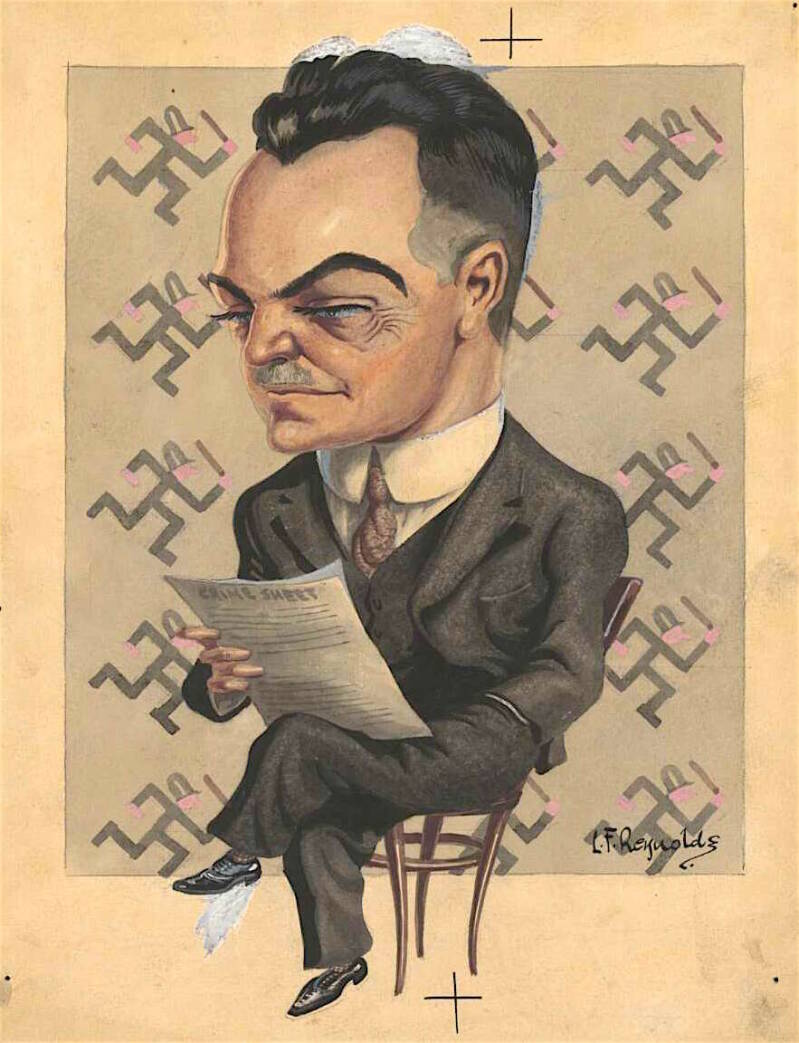

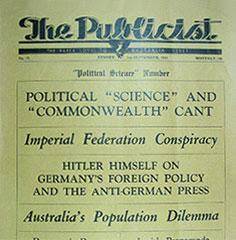
Percy Stephenson, AFM leader, interned in WWII ⇧ ‘The Publicist’, mouthpiece of the AFM ⇧
Create Your Own Website With Webador