


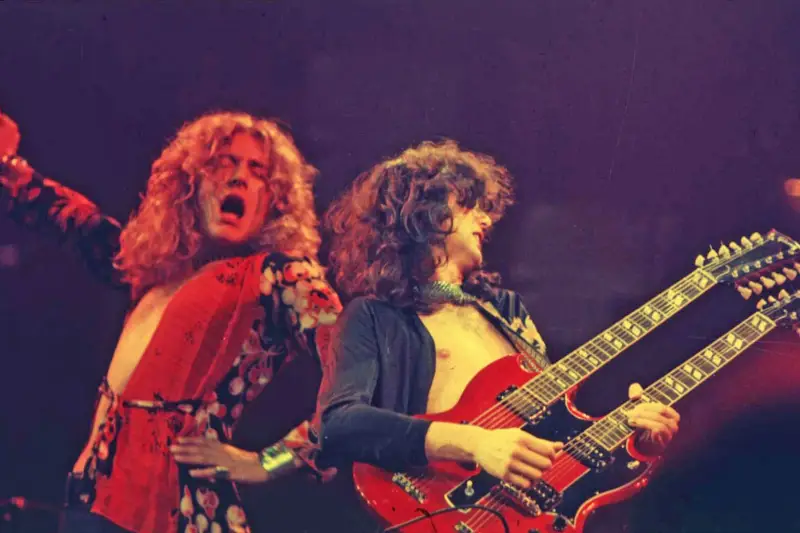
Plant and Page, Led Zeppelin in concert, 1975 (photo: Laurance Ratner/Wireimage) ⍗


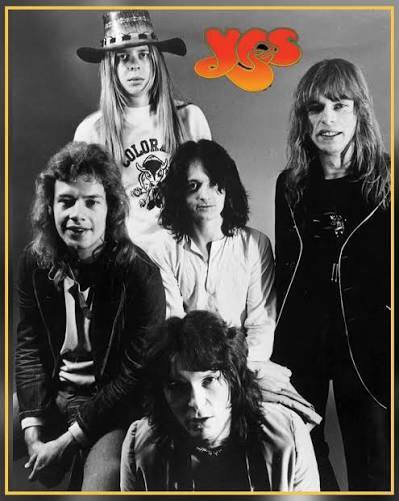
Above: Yes, circa 1971
745 words
🎸 🎸 🎸
Britain was rolling toward the end of 1969 and the close of the decade—“the fag-end of the Sixties” as the cult movie Withnail and I described it—rock music magazine scribes were looking into their crystal balls to nominate two anointed bands that, they opined, would come to dominate the brave new world of rock in the Seventies. They opted for Led Zeppelin and Yes. The end was nigh for the Beatles’ ascendency, the unchallenged kings of the genre were unravelling fast as a creative unit—in August 1969 the once-fab four recorded together for the very last time—amid non-stop internal bickering on route to the irreversible breakup in April 1970. The industry and the fans were looking for contenders to take over the Beatles’ mantle as the world’s foremost band.
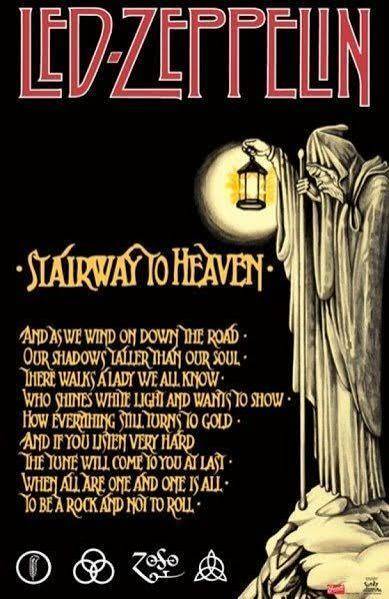
On the other side of the Atlantic many fans were talking up Creedence Clearwater Revival’s credentials but Melody Maker in London had a different idea. Led Zeppelin was a fairly obvious choice with their consummate “musos” ex-Yardbirds Jimmy Page and Robert Plant steering the band’s profile, but Yes, maybe less so. Both bands were founded in 1968 and both were with the same label, Atlantic Records, but there the similarities ended. Led Zeppelin or simply LZ was all about heavy, blues-infused hard rock, whereas at the other end of the spectrum, Yes led the vanguard of progressive rock, churning out songs of intricate, high-concept “prog rock” virtuosity. While the first was pioneering 1970s hard rock (creating “new sonic frontiers” was one critic’s descriptor), the second contender was injecting the standard rock song with the influences of jazz, classical and free-form [‘Understanding the rivalry between Yes and Led Zeppelin’, Tim Coffman, Far Out, 29 April 2023, http://faroutmagazine.co.uk]. Venturing comparisons of each group’s musical merit is fraught with caveats. As one critic put it, “Despite their rivalry, Zeppelin would never write something as ambitious as “Roundabout”, and chances are Yes was never going to write “Achilles’ Last Stand” either.”
Led Zeppelin vs Yes
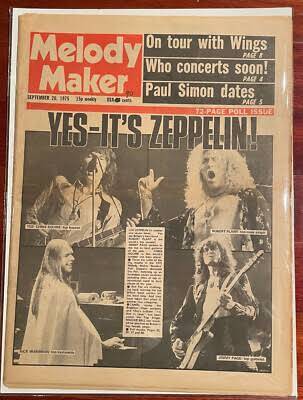
How the two bands came to be in competition for the prize of rightful heir to the Beatles’ throne was driven by the music media, the likes of Melody Maker magazine (aka MM) who conducted periodical polls which always saw the two “rivals” swapping places over the decade as the fans’ № 1 favourite. While popularity is the lifeblood of modern, non-classical rock and pop, no polls could ever determine which was the greater band, ultimately a subjective matter which hinges on the personal taste and musical preferences of individuals. Both were iconic British bands but what can be said is that LZ’s raw, explosive and earthy songs won them a much more mainstream commercial following than that of Yes whose appeal for its ambitious and long and often complicated compositions was a bit more niche.
Supergroup stillborn
By the late 1970s Yes was no longer producing work that matched the peerless quality of their earlier classic albums (“Close to the Edge”, “Fragile”, “Relayer”, “Time and a Word”). Their record sales were on the decline, regular changes of personnel affected the band’s harmony, the departure of vocalist–songwriter Jon Anderson and keyboardist Rick Wakeman was a severe blow➊, prompting the remaining members of Yes to disband in 1980. At the same time Zeppelin was experiencing an existential crisis of its own, culminating in the accidental death of drummer John Bonham, a watershed moment which led to the dissolution of the band. As a consequence some members of both bands were looking to pick up the pieces of their careers, leading to an unlikely union between LZ’s Jimmy Page and the two members of Yes who didn’t bail out of the prog rock powerhouse, Chris Squire and Alan White. The trio jammed together in 1981, enjoyed the connexion so much so that they tentatively formed the rudiments of a new (composite) band, to be called XYZ (standing for “Ex-Yes and Zeppelin”). Four unreleased demo tapes were made, followed by an unsuccessful attempt to entice Robert Plant to join the embryonic band. At this point the XYZ project stalled and, despite occasional murmurs, has never seen the light of day➋.
♬𖦆𖦆𖦆𖦆𖦆𖦆𖦆𖦆𖦆𖦆𖦆𖦆𖦆𖦆𖦆𖦆♬
➊ Zeppelin’s personnel conversely were much more stable, the four principal members stayed in the band for it’s entire duration (1968–1980)
➋ Yes, with Anderson back in the band, reinvented themselves in the 1980s, producing hits like “Owner of a Lonely Heart”
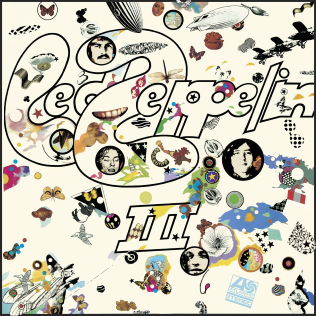
Led Zeppelin III (1970)
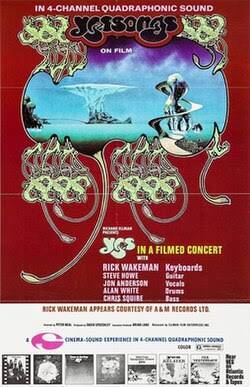
Triple album Yessongs (1973)
Create Your Own Website With Webador