

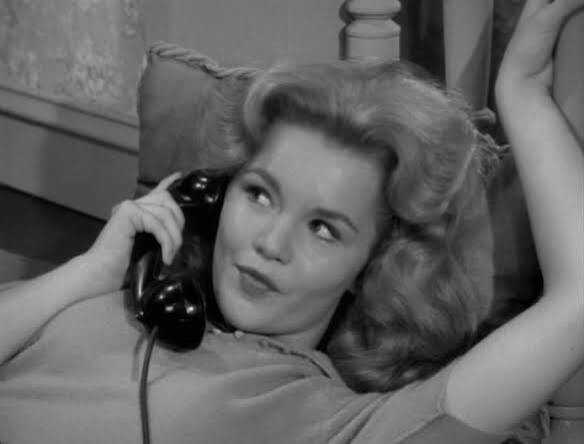
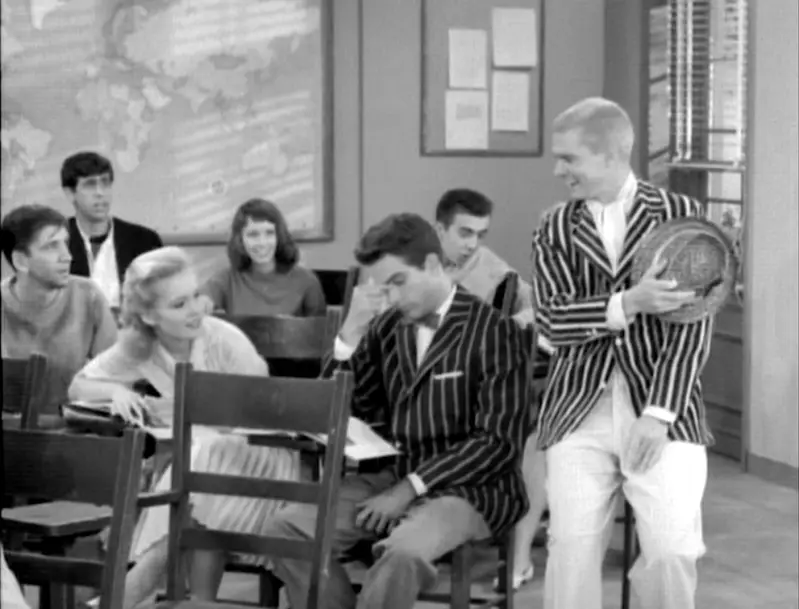
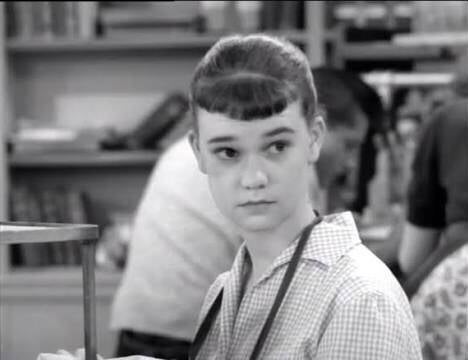
⇧ The always calculating Thalia ⇧ Dobie and Milton staging a best-dressed contest in class ⇧ Zelda
1317 words
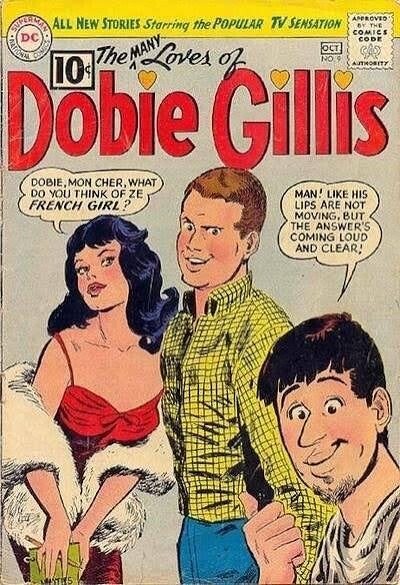
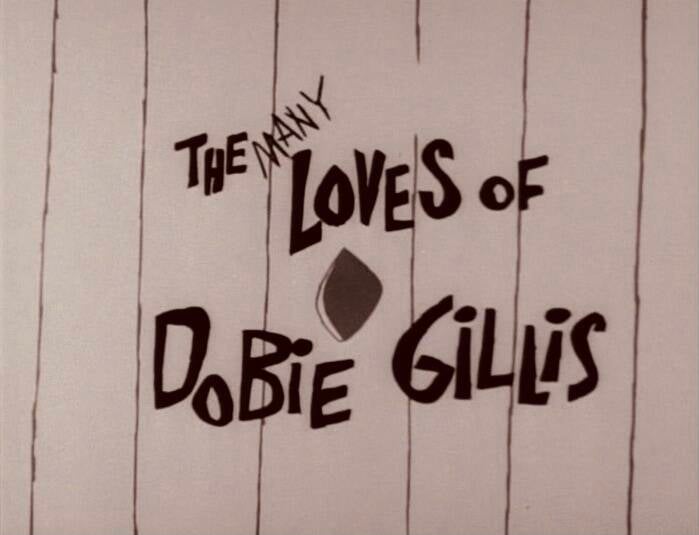
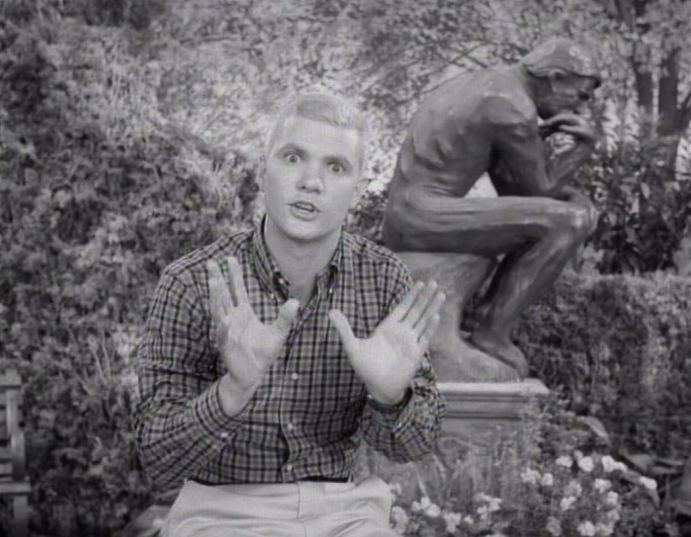
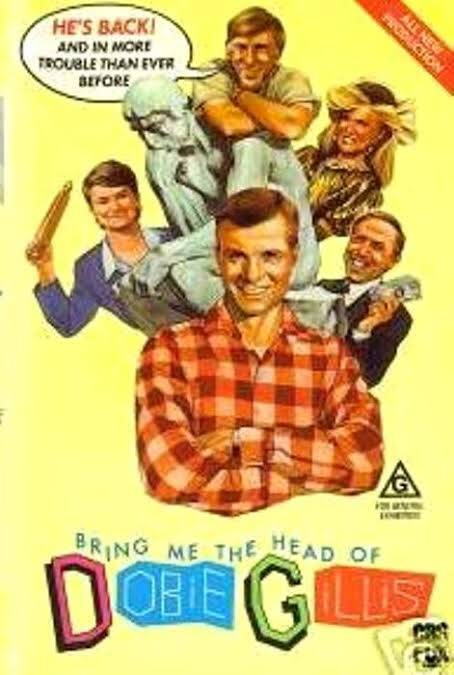
Back in the prehistoric era of television I’d spend most nights glued to our black-and-white Grainymatic© set, studiously deaf to a crescendo of parental entreaties to go to bed. My favourite comedy show on the tube in those pioneering televisual days was The Many Loves of Dobie Gillis. Not sure why it was my fave…in an archaic era in which the Western was king there was a dearth of good sit-coms on the box (I never really took to Sgt Bilko which most people singled out as the sit-com front-runner circa late Fifties), but it was Dobie G for me. The CBS series ran from 1959 to 1963, created by Max Shulman and adapted from his humorous short stories about student campus life at a Midwestern university. The eponymous Dobie, supposed to be a 17-year-old junior college student, was played by 25-year-old Dwayne Hickman with bleached blond hair. Basically it’s a boy chases girls story in which Dobie generally lucks out. Each episode would start with the catchy gimmick of a contemplative and often forlorn-looking Dobie in imitative pose alongside a statue of Rodin’s ‘The Thinker’. Dobie would address the screen directly in one of the first TV instances of breaking the fourth-wall, while launching into a lengthy monologue bemoaning his current girl woes.
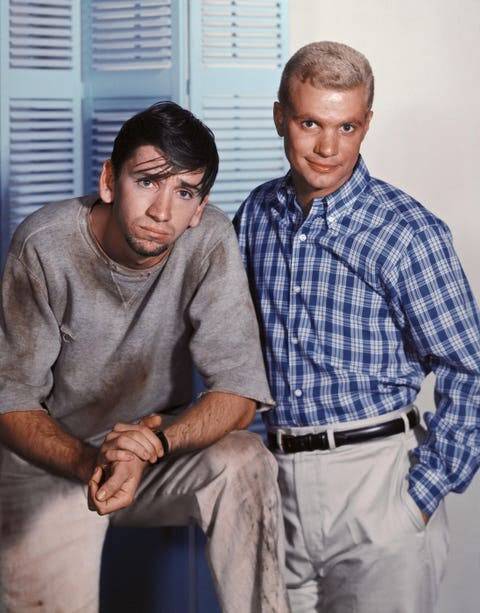
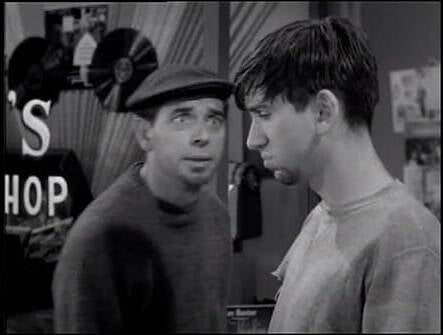
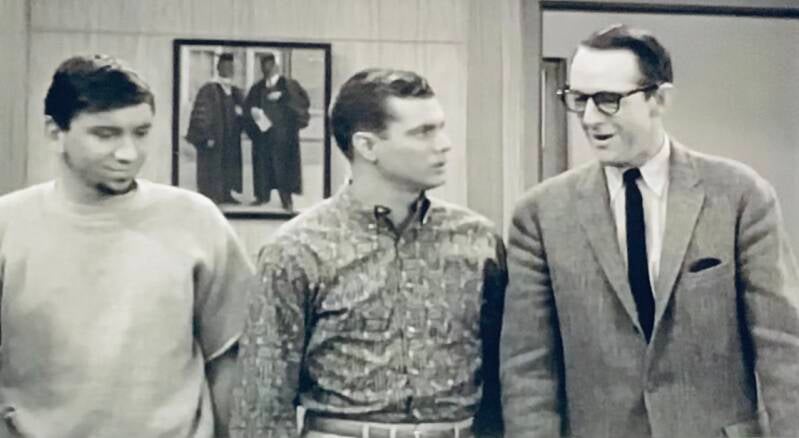
First and foremost among the program’s other key characters caught up with the latest saga of Dobie’s growing pains is his buddy Maynard G. Krebs, played by Bob Denver. Dobie may be the central figure in every story but it’s Maynard who steals most of the scenes and elicits the biggest laughs. Maynard is TV’s ur–beatnik, his appearance is scruffy, the goatee beard, torn, grimy sweatshirt (a “one-man slum”), he’s perpetually off on a tangent, lost in his headphones during class, playing the bongo drums and so on. It’s a more innocent age so no one suggests that Maynard is “on something”, but whatever the cause he’s on a different planet to everyone else in the joint. Maynard’s eccentricity is always front and centre in the show as Shulman uses him to milk the stereotype of the beat generation subcultureⓐ. Maynard is hip with the beat jargon, imprinting many memorable catchphrases in the viewers’ minds – from his signature entrance line “You rang?” to “Like, cool man”, “Clue me Pops” and “Daddy–O”. When asked what the “G” stands for in his middle name, his ludicrous answer is “Walter”. In keeping with his beatnik non-conformism and innate indolence, whenever Maynard hears the word “work” he erupts into an involuntary yelp! At random moments Maynard invokes the names of jazz icons Dizzy Gillespie and Thelonious Monk who he “digs” and that of 1950s symbol of artistic youth rebellion Sal Mineo, to underscore his own “coolness” and his anti-establishment credentials (‘Beat To A Pulp: Taking ‘Bout Our Generation(s)’, Alan Bisbort, Please Kill Me, 11 July 2018, www.pleasekillme.com).
Another prominent character who appears mainly in Series 1 is Thalia Menninger (Tuesday Weld), the money-obsessed girl—adorable but infuriating—who Dobie is always pursuing and failing to get. Dobie has a rival for Thalia’s affections, Milton Armitage, a handsome super-rich snob who Dobie can’t compete with. Played by Warren Beatty, he only appears in a handful of the early episodes, later on when cocooned by Hollywood stardom Beatty incredulously tried to deny he was ever in ‘Dobie Gillis’…however IMDb knows better!ⓑ When Beatty left the show the rich kid role was filed by the snob ninja Chatsworth Osborne Jr (Steven Franken) who played the part of an insufferable, condescending young aristocrat to a treat. The most prominent adult characters in the series are Dobie’s parents, Herbert and Winifred, Herbert, a hard-working grocery store owner whose complete exasperation at Dobie’s inherent failure to commit to a steady job leads him to regularly utter one of the show’s trademark lines: “I gotta kill that boy, I just gotta”.
Where Maynard’s behaviour is more maniac, the show’s other equally interesting character is a brainiac. Petite teen Zelda Gilroy is an atypical love “interest” for Dobie, not a “looker” like the beautiful but vacuous girls Dobie usually gravitates towards, but she is super-bright and resourceful even if a bit of a nerd. Zelda relentlessly pursues the reluctant Dobie, refusing to take “no” for an answer. The brainy Zelda repeatedly ties him in knots and gradually wears down his resistance. Zelda tells Dobie that it’s inevitable that they will wind up together, attributing it to her theory of propinquity, their constant proximity to each other due the alphabetical seating arrangements in class – “Gillis” next to “Gilroy”…she tells him, “Don’t fight it Dobie. You can’t beat science”. And Zelda is ultimately proved right, by the time of the spin-off ‘Dobie Gillis’ TV movies of the 70s and 80s the two are married. The Zelda character was popular enough for Sheila to be offered a follow-up series of her own, a pilot for ‘Zelda’ was made but the series got canned because a CBS executive thought Sheila looked too butchⓒ.
The series had a host of other memorable supporting characters over the course of its run. Mr Pomfritt, later Prof Pomfritt (played by William Schallert), is Dobie and Maynard’s teacher (of most subjects) at school and college. Pomfritt views his students as setting a very low bar (Zelda excepted) and they invariably find themselves on the receiving end of his dry but gentle deadpan quips – “All right, my young barbarians…”; “Students…and I use the term loosely”; etc. When Denver (and therefore Maynard) is briefly drafted, he is replaced for a brace of episodes by Michael J. Pollard playing his cousin Jerome Krebs who temporarily fills Maynard’s void, exhibiting the same beatnik persona and counterculture aspirations. Another hard-to-forget character in a knuckle-gnawing sort of way is Clarissa Osborne (Doris Packer). In Season 1 she is Milton Armitage’s mother. But after Milton was written out of the series, she seamlessly transforms into the mother of his replacement Chatsworth Osbourne Jr, Milton's cousin. The rich and overbearing Mrs Armitage/Osbourne has a pathological aversion to common people, listens to no one and bulldozes her way over everybody.
The characters Zelda and Maynard, it could be argued, were quite revolutionary in a sense, as harbingers of social movements to come. Because Zelda though young knew what she wanted and was not afraid to vocalise it, was she “nudging the feminist needle ahead” a full decade before the Women’s movement really launched itself? Similarly, Maynard the self-styled “protest cat” with a “casual disregard for rules and social strictures” and non-conformity in dress, anticipates the authority-defying strain in society, the anti-establishment ethos which didn’t take root until later in the Sixties (Neil Genzlinger, The Many Rebellions of ‘Dobie Gillis’, New York Times, 28 June 2013, www.nytimes.com).
Most other pioneering TV teen comedies that emerged in the Fifties—think of Father Knows Best and Leave It To Beaver—tended to present a picture of conservative family values, wholesomeness and typically sentimentalised. What separates The Many Loves of Dobie Gillis from these traditional formulaic shows of their day is how it makes the core of the story about teenage angst and counterculture attitudes, albeit in a light-hearted and non-serious way.
Footnote: the CBS series was not Dobie Gillis’ first foray onto the screen. In 1953 an MGM musical comedy, The Affairs of Dobie Gillis, was released. Starring Debbie Reynolds and Bobby Van (as Dobie) and scripted by Shulman, the film, sans either the Maynard or Zelda characters, didn’t register with either fans or critics.
ԹԾᘏᏬ୪ԹԾᘏᏬ୪ԹԾᘏᏬ୪ԹԾᘏᏬ୪ԹԾᘏᏬ୪ԹԾᘏᏬ୪
ⓐ some view Maynard more as a “proto-hippie” than a beatnik, or perhaps “a transitional popular culture figure between beatniks and hippies” (Bisbort)
ⓑ in the late 1980s Dwayne Hickman famously remarked: “If I were Warren I’d cop being on Dobie and deny being in Ishtar” (a blow-out budget movie that bombed big time at the box office, produced by and co-starring Beatty)
ⓒ in the 1970s Kuehl left acting, qualified as a lawyer and practiced, eventually teaching law at university and later became the first openly gay state legislator in California
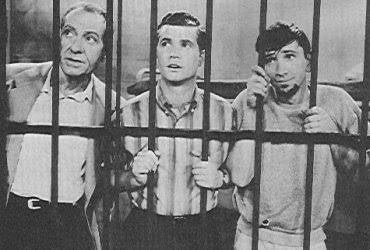
Maynard gets banned from Riff’s record shop for wearing out a Dizzy Gillespie album by playing it infinitum ⇩
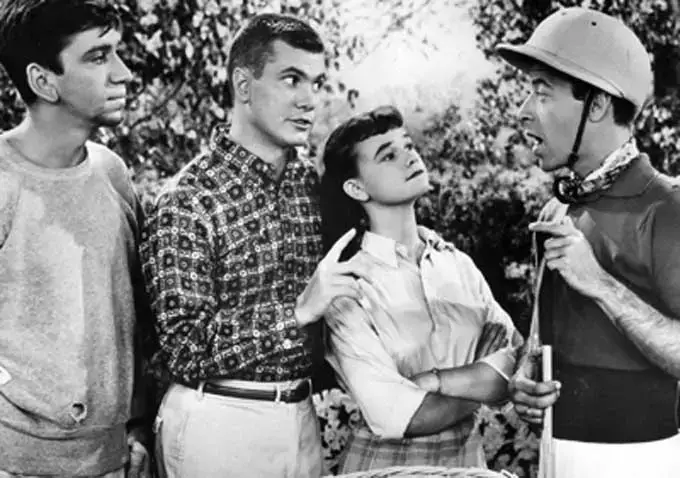
⇧ Chatsworth Osbourne Jr (R) in the full polo kit
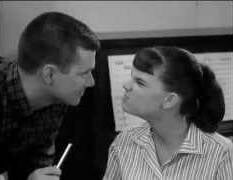
⇧ Zelda’s tactics included wrinkling her nose at Dobie, triggering a reciprocal reflex wrinkle from Dobie – much to his annoyance
Maynard, Dobie and classroom mentor Mr (Leander) Pomfritt ⇩
Create Your Own Website With Webador