

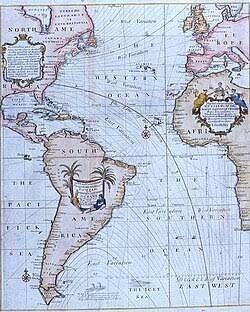
⇩ The rugged and forbidding coastline of Trindade

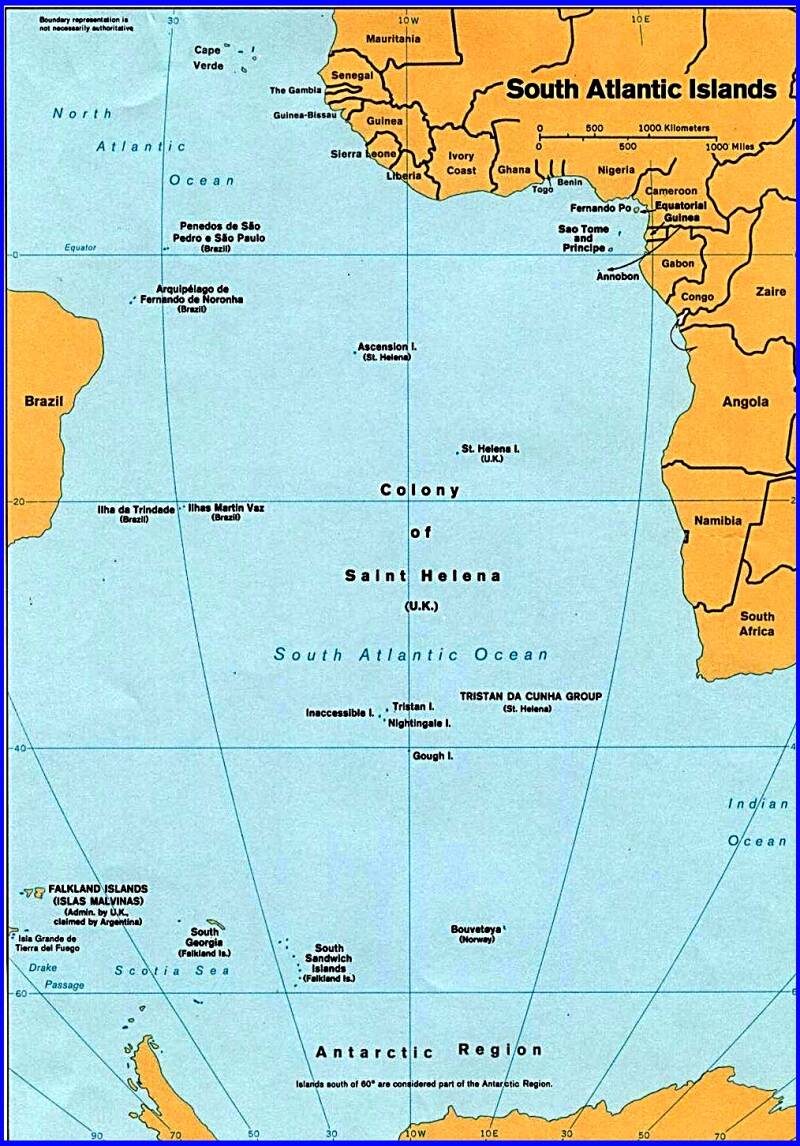

⇧ Image: https://faculty.ucr.edu
646 words
Some 1,140 km east of Brazil is a remote, volcanic island outpost in the South Atlantic called Trindade Island (Ilha da Trindade)➀, part of a small, isolated archipelago that includes Martim Vaz Island. It was discovered in 1501–02 by Portuguese navigators, credited mainly to João da Nova, and remained part of the Portuguese Empire until 1824 when Brazil won its independence from Portugal and Trindade was incorporated into the newly-formed Empire of Brazil.
Notwithstanding that Trindade fell within the Portuguese sphere of influence, Britain had made historical claims on the uninhabited island, beginning with astronomer Edmund Halley’s visit in 1700…Halley took possession on behalf of the British crown, at the same time being responsible for introducing species, letting loose wild goats and hogs which led to degradation of the island’s vegetation. There were further attempts to consolidate Britain’s hold over the island which was thought would make a good provisioning base for passing “Indiamen”. In the early 1780s Commodore George Johnstone briefly established a naval base on Trindade but he abandoned it before the Portuguese could retaliate with an armed expedition.
The “Prince of Trinidad”
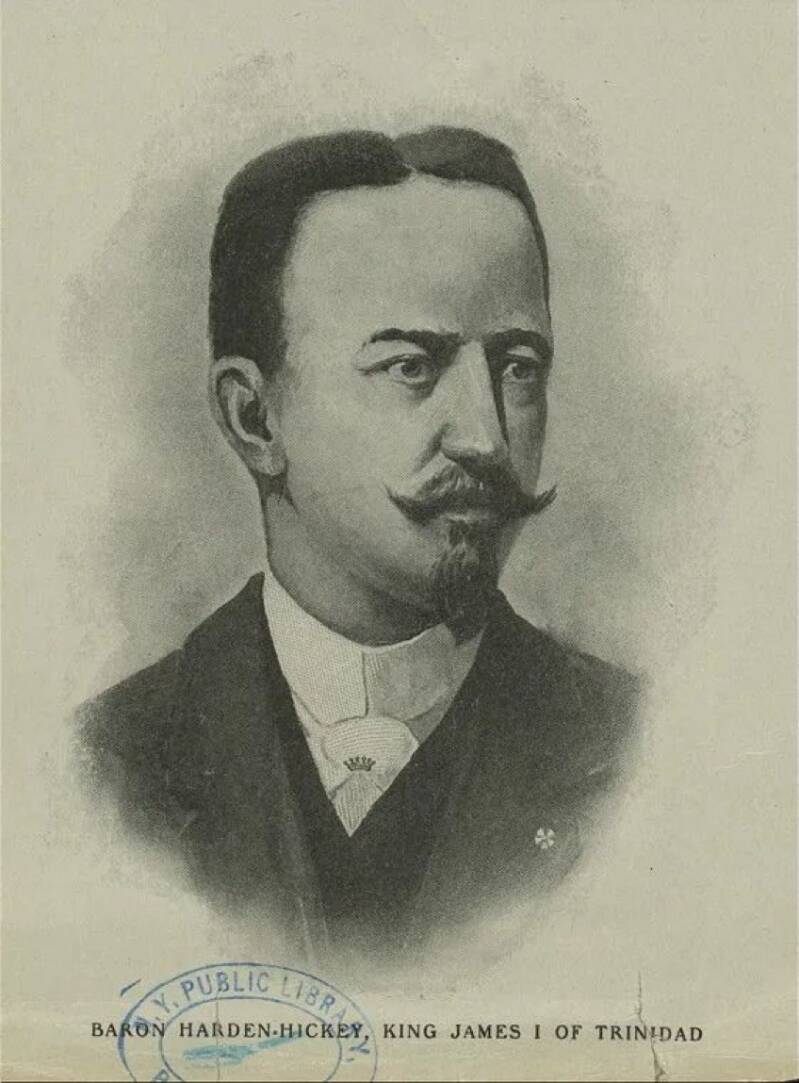
Around 1890 Franco-American adventurer James Harden-Hickey (aka Baron Harden-Hickey) comes into the island’s story. On route to the Indian Ocean his boat stopped at Trindade. Because Harden-Hickey believed it to be terra nullius he claimed it for himself and set about turning it into his personal monarchy. Calling himself James I, Prince of Trinidad➁, the eccentric Harden-Hickey built up the accoutrements of sovereign statehood drawing on money from his wealthy father-in-law, he had a crown made for himself, issued postage stamps for the principality, designed a national flag, a coat of arms with it’s own chivalric order known as the Cross of Trinidad. He hired personnel, mainly friends, to run it and even established a diplomatic office for the unrecognised state in New York (217 West 36th Street, Manhattan). Harden-Hickey envisioned his island-state as a military dictatorship headed by him. To secure finance for the island’s infrastructure he sold government bonds – for a government that existed only in his mind!
Despite Harden-Hickey concerted efforts to reify his new “country” he was met with international ridicule and his claim went ignored, including from the United States from whom he sought to elicit support. In January 1895 the British warship Barracouta landed on the island, claiming it for Great Britain and raising the Union Jack…the “Prince” was in California when the British invaded (‘MR. HICKEY’S TRINIDAD INVADED’, New York Times, June 18, 1895, pg. 3). London’s intention was to use Trindade as a stop for an undersea telegraph cable to Argentina. An additional factor perhaps interesting the British in Trindade was the rumours rife through the 19th century that a gold and silver treasure had been buried on the island by pirates, prompting various adventurers and soldiers of fortune to visit it hoping to find the purported riches.
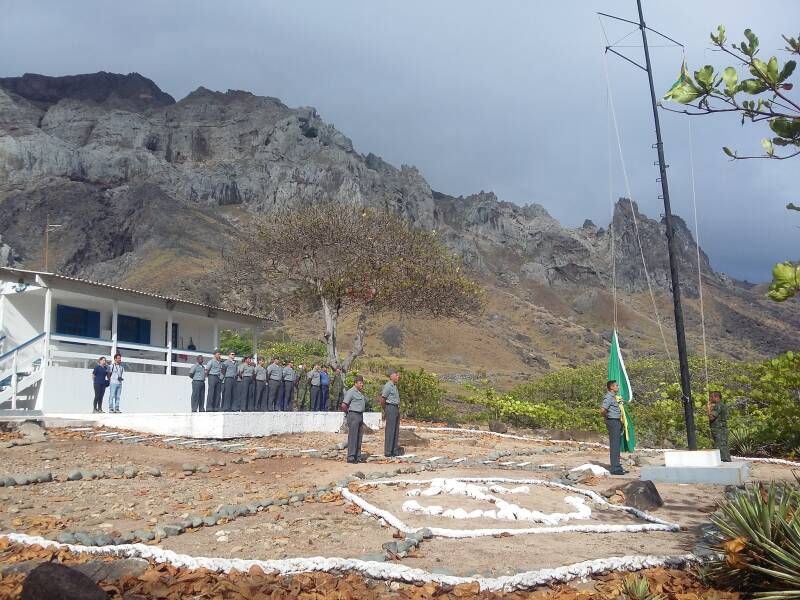
Brazil’s response to Britain’s unilateral takeover was a diplomatic one➂. Rejecting the British assertion that Trindade had been abandoned, the Brazilian government presented documentation verifying the Portuguese discovery, past occupation and the transfer of sovereignty to Brazil at independence. Portugal’s participation in the dispute as an historical and documentary mediator contributed to the Brazilian case. Faced with Brazil’s persuasive evidence Britain backed down and conceded defeat in the dispute. The British force withdrew from Trindade in August 1896 without any military action occurring. The following year Brazil fixed a bronze marker on the island which read “O direito vence a força” (“right beats force”). Since 1957 the island’s purpose for Brazil has primarily been as an oceanographic research station and is guarded by a small, permanent naval presence.
▓▓██████████████████████████▓▓
➀ in English, “Trinity Island”
➁ Harden-Hickey chose the Spanish cognate “Trinidad” in preference to the Portuguese name “Trindade”
➂ although Brazil also despatched a naval show of force to Trindade
Flag ceremony, naval base, Trindade Island ➲
⇩ “Prince James I”
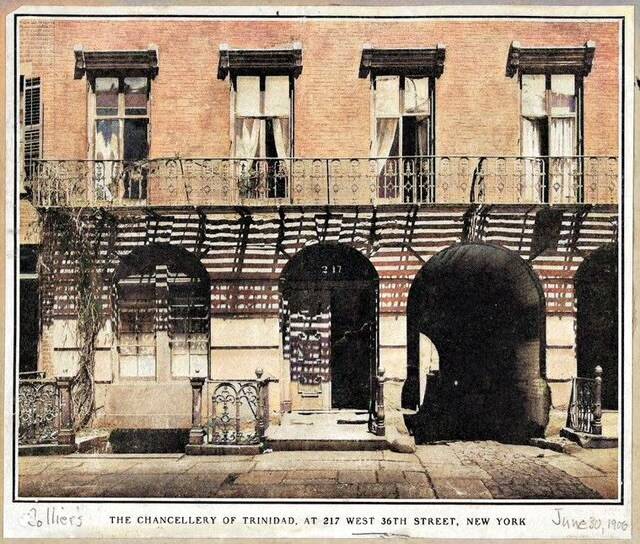
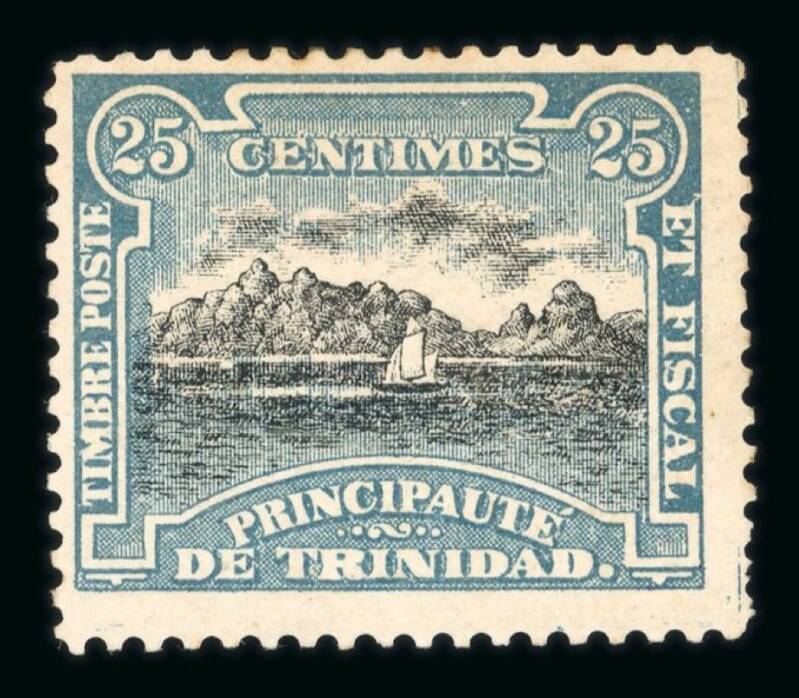
⇧ The Chancellery, Trindade’s consular office in NYC (source: Kingsley Collection)
Create Your Own Website With Webador