



Above: Rustic ”Ashvegas”, not a casino in sight (photo: Easy Big Trees)
MMXXVI~originally published 27 June 2026
904 words
✿ ✿ ✿
Etymology
Hypocorism: from Ancient Greek: hypokorisma ~ translated as “to use pet names”; “to use child-talk”. Formed from hypo (“under”, “beneath”, “less than”) + –korizesthai (“to caress”)
The hypocoristicsphere rules OK? Hypocorisms permeate everyday, casual conversation and informal communication, humans luxuriate in their use even if the word itself is foreign to them. First, a simple definition. A hypocorism is an affectionate pet name or nickname articulated in alternative form. It can be a shorthand version either of a person’s name or a name of something (typically a common or proper noun). Hypocorisms (or hypocoristics) live in informal speech and therefore are colloquialisms, or at least a subset of colloquialisms. They have specific social functions, a key one being the signalling of intimacy. Family members, close friends and romantic partners verbalise hypocorisms to enhance intimacy and closeness with each other. Given names provide countless opportunities for forming diminutives, eg, Christina modifies to Tina; Gwendolyn = Gwen (or Wendy) ; Roderick = Rod (or Rick); Richard = Dick; (more opaquely) Margaret = Peg. In Australia the first names Barry and Garry often get clipped to become, respectively, “Bazza” and “Gazza”. Married partners tend to bestow hypocorisms on one another, intended as term of endearments, like “hubby” and “missus”, plus various other cringeworthy pet names.
While acknowledging that hypocorisms has a presence in most languages and dialects in the world—fostering closeness and inclusiveness—many linguists conclude that by far the most prolific and lively uses of hypocorisms are to be found “Down Under”🇦. In New Zealand and especially Australian English these alternative forms of speech are frequently employed to express in-group solidarity and a sense of mateship, “showing a laid-back, friendly or jocular cultural ethos”. Hypocorisms find themselves injected into a plethora of contexts embracing so many different areas of Australian life and communication, as the following sampler suggests: “breakfast” is rendered as “brekkie” 𖡤 “afternoon” becomes “arvo” 𖡤 “work break” (esp. blue collar) = “smoko” 𖡤 (petrol) “service station” = “servo” 𖡤 “lawn bowling club” = “bowlo” 𖡤 (liquor) “bottle shop” = “bottle-o” 𖡤 “motorcycle gang member” = “bikie” 𖡤 “barbecue” = “barby” 𖡤 “U–turn”= “yewie”🇧; etc.
The mechanics of this linguistic process is straightforward, the root-derived word is truncated or clipped to its monosyllabic (or disyllabic) base and then suffixed by adding a diminutive suffix ➲ “-ie” or “-y’” or “-o”. We see this to good effect in the formation of alternative vocational titles: “tradesman” is clipped to “tradie” 𖡤 “electrician” becomes “sparkie” 𖡤 “carpenter” = “chippy” 𖡤 “bricklayer” = “brickie” 𖡤 “paramedic” = “ambo” (ie, truncating of “ambulance driver”) 𖡤 “journalist” = “journo” 𖡤 “politician” = “pollie” (you get the idea). In NZ aka Aotearoa, on a variation on this theme, parking wardens or rangers have acquired the jocular hypocorism of “walkie-chalkies”(ie, as per their practice of hoofing it round the streets to chalk the tyres of parked tyres). Hypocorisms/diminutives are legion in Australian English – “reffo” for refugee” 𖡤 “wino” for “alcoholic” 𖡤 “dero” for “derelict” 𖡤 “sunnies” for “sunglasses” 𖡤 “mozzies” for ”mosquitoes” 𖡤 “crocs” for “crocodiles”, etc. In matters of culinary preference there is “parma” for “parmagiana”𖡤 “schnitty” for (chicken) “schnitzel” 𖡤 “sanga” for “sandwich”, and many more🇨.
The profound imprint of hypocoristics in Australian and New Zealand English is well-illustrated in the clipped use of “rego” as an alt-word to “registration”, particularly in reference to motor vehicles. “Rego” as the preferred term is so deeply embedded in everyday life, not only in casual conversations but is now normally standard in government processes and official advertising, This equally applies to the diminutives “compo” (for “compensation”) and “info” (for “information”).
Cuteness in nomenclature
The idea of hypokorisma—the Greek root for infantile “child-talk”—points to the way hypocorisms are used to soften communication with children and pets, projecting cuteness, empathy and playful care ➲ simple examples of hypocorisms that adults affectionately give to the name for household pets include “doggie”, the onomatopoeic “bow-wow”, “puss” and “budgie”. Underlying the softening function of hypocoristics is its euphemistic role in informal communication.
Geography is not spared the invasive tentacles of the hypocoristic, again this is especially evident in Australasia. In Australia multi-syllable places names are prime targets for extensive clipping, such as “Freemantle” which shrinks into “Freo”; “Wollongong” deemed too long becomes “Gong”; “Rockhampton” is “Rocky”, and so on. “Brisbane” gets two, “Brissy” and “Brisvegas”…the “Vegas” suffix is also in use across the Tasman in NZ/Aotearoa with Rotorua (“Rotorvegas”) and Ashburton (“Ashvegas”), although the suffix ascribed to Ashburton, a quiet rural town is intentionally ironic, it bearing absolutely zero resemblance to the high-roller gambling, casino mecca of Las Vegas.
▓▓▓▓▓▓▓▓▓▓▓▓▓▓▓▓▓▓▓▓▓▓▓▓
🇦 which is not to say that hypocorism is not a salient feature of other dialects of English, like British and American English. According to the Modern Language Association of American the US has an inordinate bent for hypocoristics
🇧 as in “chuck a yewie!”
🇨 in the early 2000s Prof Roly Sussex (U.Qld) identified some 2,500 hypocoristics in use in Australian English
๛๛๛๛๛๛๛๛๛๛๛๛๛๛
Reference works consulted
Dianne Bardsley, ‘The Increasing Presence of Hypocoristics in New Zealand English’, New Zealand English Journal (1st January, 2010), www.wgtn.ac.nz
Helen Bromhead, ‘Gatho, lippy, rego — why Australians love hypocoristics’, ‘Lengo,blʌg, 9th March, 2021, www.lingoblog.dk
Hypocorism vs Abbreviation
Hypocorism seems to be used more or less interchangeably with diminutive, however linguistic scholars are careful to distinguish hypocorisms from abbreviations. The former entails a process of clipping of the root word or name’s syllables, conversely, an abbreviation pares the original back to its prefix (initial letters) or syllables, eg, “Oct”, from “October”.
Hypocorism vs Slang
Attitudinally, slang is a very different critter to hypocorism. Where hypocorisms generate affection and closeness to kith and kin, slang seeks to be trendy, to shock and to amuse, its users have a shared identity with a specific demographic or peer subgroup. Another sharp difference between the two is that while a hypocorism retains the original standard word’s meaning, slang’s inclination is towards semantic change, taking a conventional, established word and applying new and even radical meanings to it. That said, some slang words establish themselves over time as well-known shortcuts and can shift into the hypocorism camp, examples of this include “telly” (“television”), “uni” (“university”) and “tech” (“technology”).
Topical hypocorisms from the world of sport: Considering what’s just kicking off in North America ⚽️ at this point let’s throw a timely sports diminutive or two out there…soccer is a hypocorism for “association football”, as is rugger for “rugby” 🏉 Then there’s also the mimesis-evoking ping pong as a less serious alt-name for “table tennis”.
Revised 27 June 2026
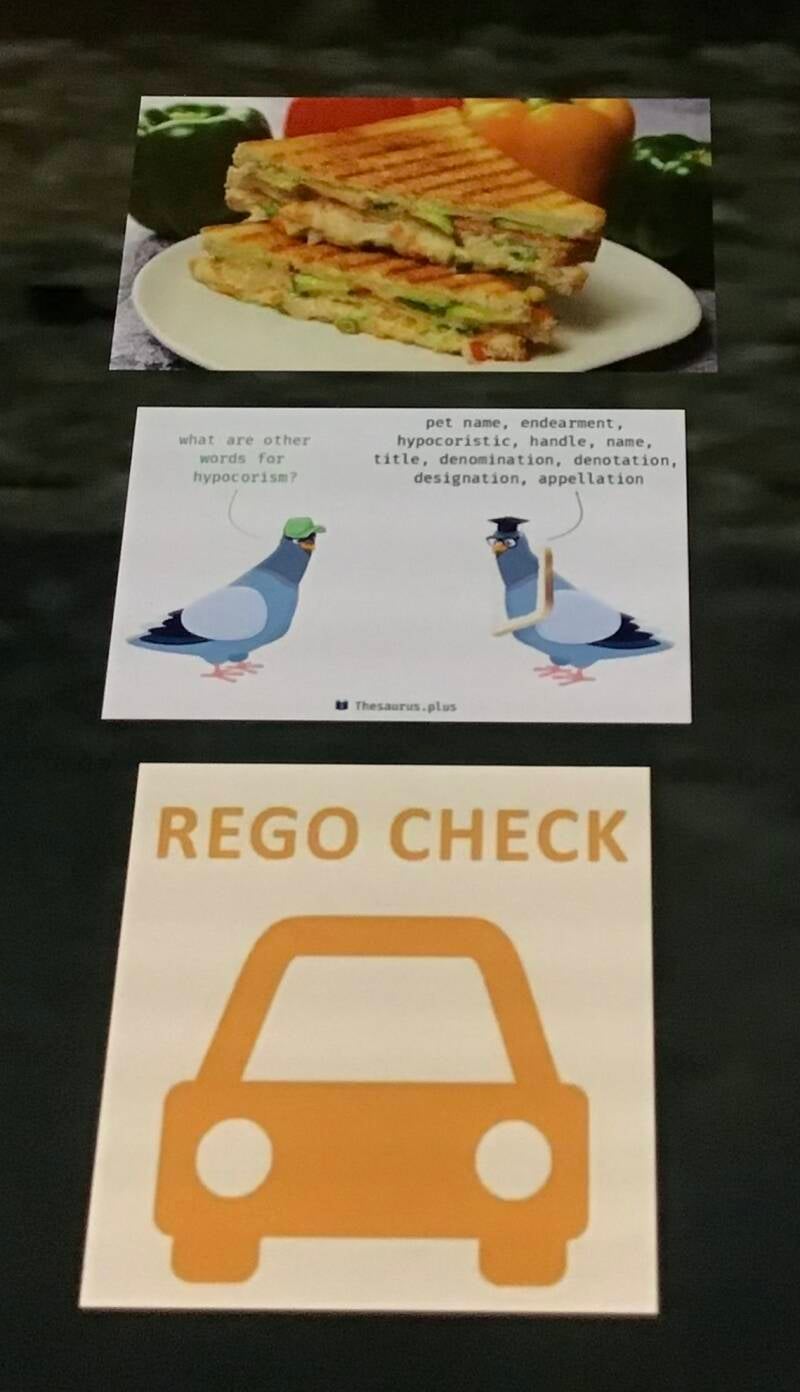
Right: the “sanga”, a hypocoristic sandwich

Above: the Auckland “walkie-chalkie” (photo: tactical solutions)
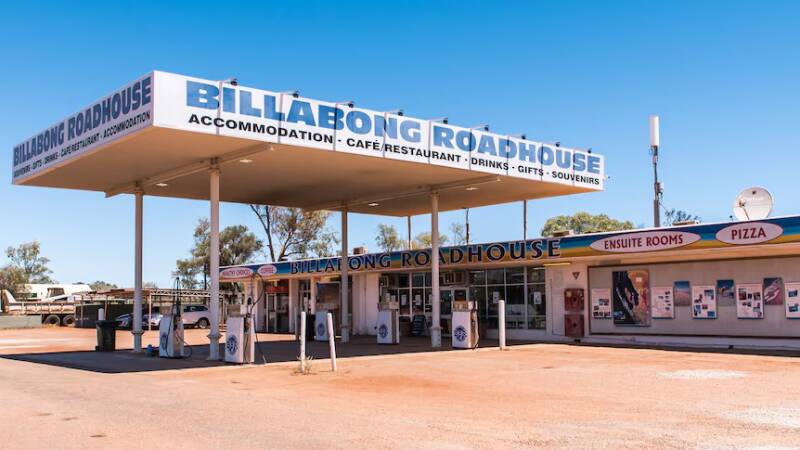
Above: the humble “Aussie servo” (photo: Getty: Damian Lugowski)
Create Your Own Website With Webador