


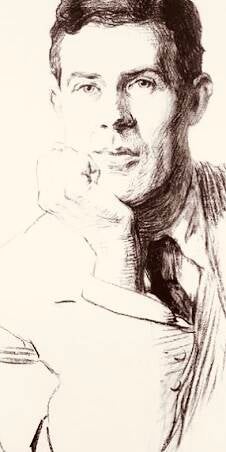
⥢ Edmund C Bentley, eponymous inventor of the clerihew
MMXXVI: originally published 31st May 2026
542 words
✑ ✑ ✑
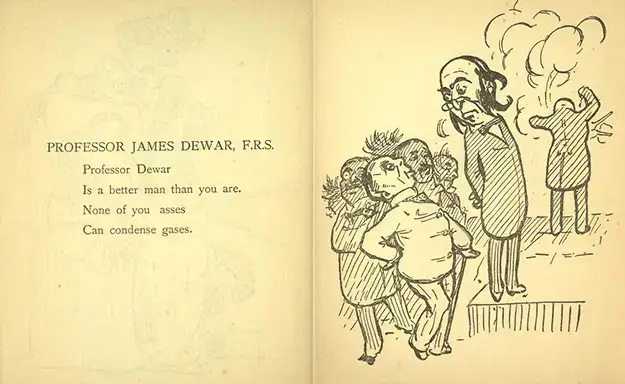
In a previous blog (13 May 2026) we looked at “shrink lit”, a modern take on the traditional short form of poetry, the haiku. This piece focuses on the clerihew, a sort of second cousin twice removed to the haiku. A more modern type of light verse than the Japanese haiku which boasts a pedigree stretching back four centuries, the clerihew had its birth in a science classroom at St Paul’s School, London, circa 1891. The schoolboy who invented the form and gave his (middle) name to it was Edmund Clerihew Bentley. A bored young master Bentley found himself diverted into penning little comical and nonsensical poems and was soon joined by a classmate (later a famous man of letters) GK Chesterton. This is considered to be the first clerihew of teenage Bentley:
Sir Humphrey Davy
Was not fond of gravy.➊
He lived in the odium
Of having discovered sodium.
The clerihew possesses a simplicity of form, with just a few rules to observe: it has to consist of four lines (two rhyming couplets), which are typically of uneven length and irregular metre. The topic is biographical, the first line should contain only the name of a famous or well-known person. The clerihew employs a specific rhyme scheme, AA-BB, and it’s intent is (absurdly) humorous or possibly gently chiding➋. These are a selection of Bentley’s poetic efforts, including his most celebrated clerihews:
Sir Christopher Wren
Said, "I'm going to dine with some men.
If anyone calls,
Say I'm designing St. Paul's."
☬ ☬ ☬
Henry the Eighth.
Had a chauvinistic faith:
To leave his wife in the lurch
he started a church.
☬ ☬ ☬
George the Third
Ought never to have occurred.
One can only wonder
At so grotesque a blunder.
☬ ☬ ☬
Lewis Carroll.
Bought sumptuous apparel
And built an enormous palace
Out of the profits of Alice.
For his clerihew on the subject of Ivanhoe author Sir Walter Scott, Bentley deviated slightly from the first line convention for the form:
I believe it was admitted by Scott.
That some of his novels were rot.
How different was he from Lytton
Who admired everything he had written!
As the clerihew gained popularity in the 20th century a number of serious and famous writers turned their hand to the form including Bentley's school chum Chesterton and WH Auden. Auden's interest was engaged sufficiently to publish a collection of clerihews in a book called Academic Graffiti – a couple of his better efforts include:
Henry Adams.
Was mortally afraid of Madams:
In a disorderly house
He sat quiet as a mouse.
☬ ☬ ☬
Louis Pasteur,
So his colleagues aver,
Lived on excellent terms
With most of his germs.
Even Bentley's own son, Nicholas, later on, had a decent stab at writing a clerihew:
Cecil B. de Mille,
Rather against his will,
Was persuaded to leave Moses
Out of “The War of the Roses.”
⧮⧯⧮⧯⧮⧯⧮⧯⧮⧯⧮⧯⧮⧯⧮⧯⧮⧯⧮⧯⧮⧯⧮⧯⧮⧯⧮⧯⧮⧯⧮⧯⧮⧯⧮⧯
➊ when Bentley published his first collection of clerihews in 1906, this line was changed to “Abominated gravy”
➋ the clerihew has been unflatteringly described as "rhyming doggerel”
Footnote: The clerihew, because of it’s humorous, juvenile-like nonsensical nature, and perhaps because it is gently mocking in tone, has had ongoing relevance as a teaching tool in engaging primary schoolchildren in the art of poetry-writing.
31 May 2026
Teaching clerihews to goats?

Create Your Own Website With Webador