


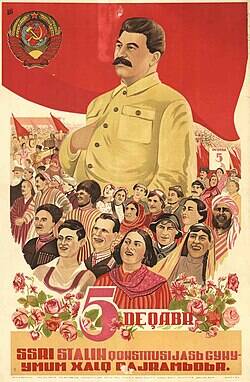
⟸ Stalin, “godfather” of Central Asian autocracy
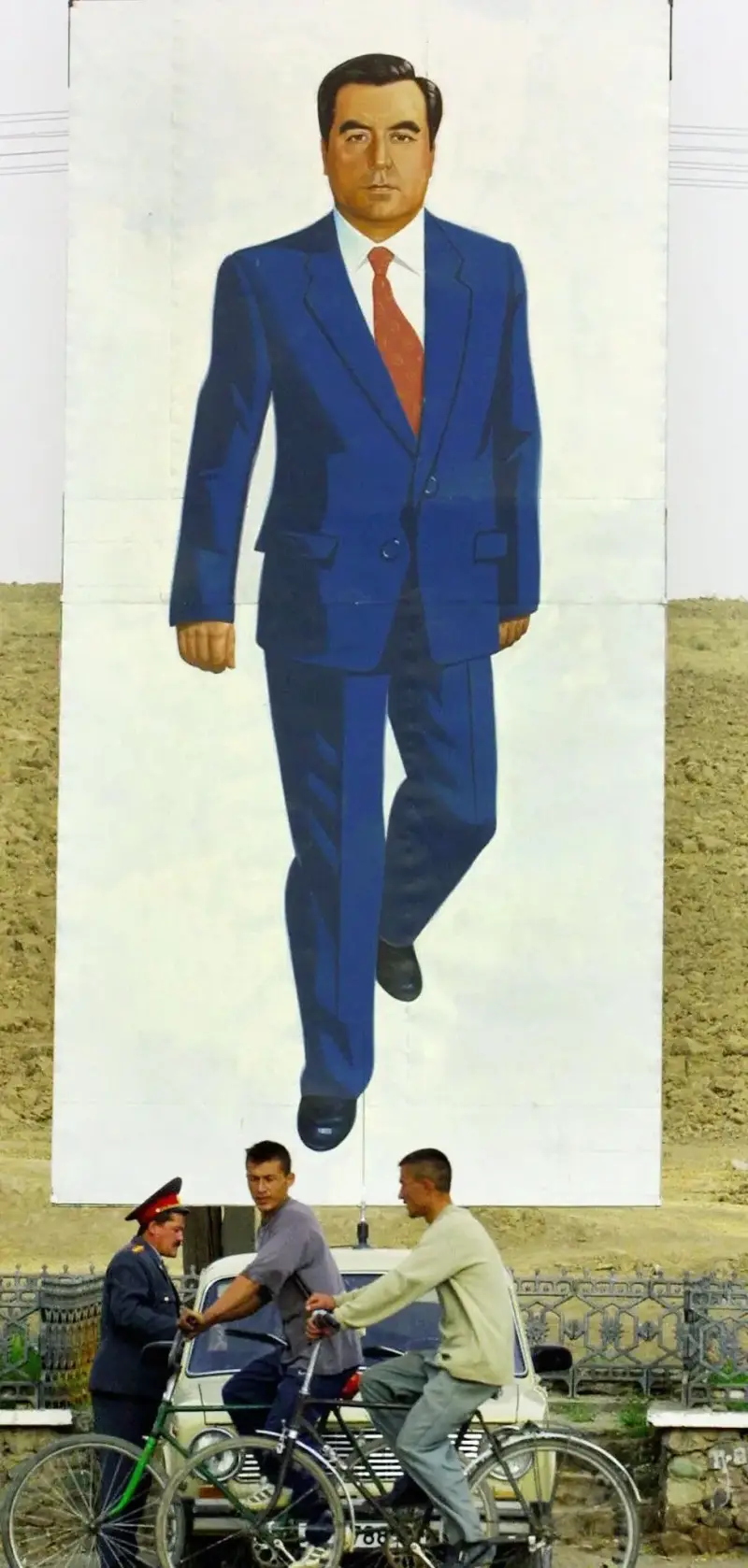
Tajikistan’s president for life Rakhmon‘s image hovers over the people ⇓
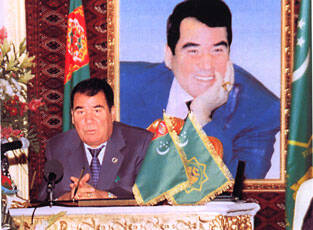
⇑ Suparmurat Niyazov of Turkmenistan, Big Brother looking over my shoulder (source: Human Rights House)
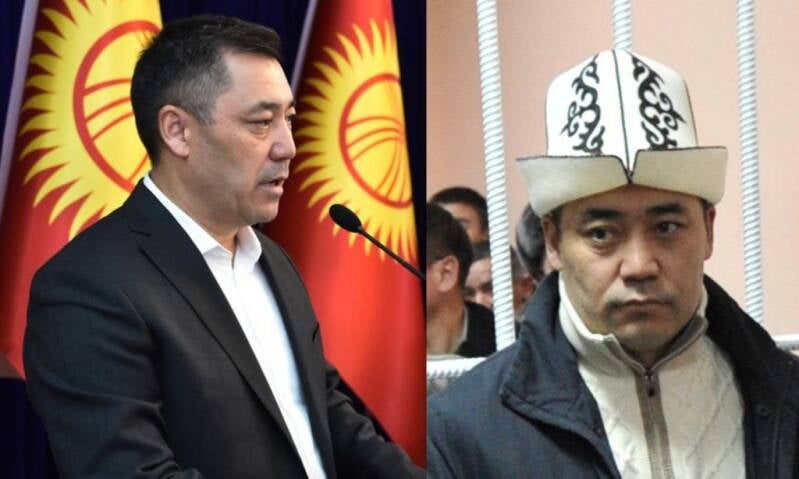
⇑ President Japarov of Kyrgyzstan, Trumpian complex? (source: novastan.org)
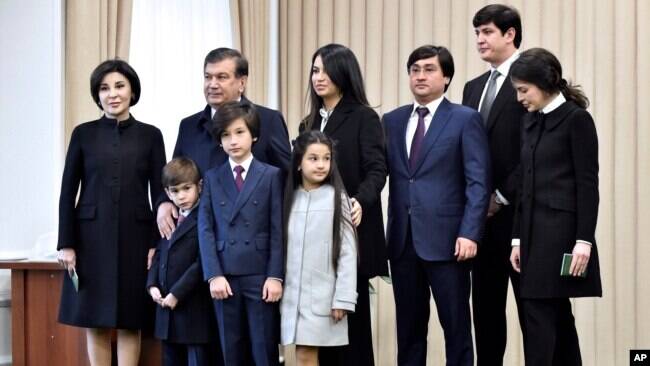
⇑ Uzbek President Shavkat Mirziyoyev’s happy family snap (source: AP)
MMXXVI: originally published 28th May 2026
1157 words
🌀 🌀 🌀
The cult of personality stems from a political strategy where a profile of an individual is created which projects an idealised, heroic, larger-than-life image of the leader. This typically involves the leader entreating the masses through nationalist appeals (populism), employing the agency of mass media-funnelled propaganda. The intended outcome is exaggerated devotion by large swathes of the population to a single charismatic leader. Public spectacles, often on a grand scale, is another manifestation of the cult.
The phenomena did not originate with 20th century totalitarianism and the rise of authoritarian dictators, Hitler, Stalin and Mussolini, though these three interwar autocrats, through manipulation of mass media and saturation levels of propaganda, basically forged the blueprint for charismatic leaders to follow. Nationalistic leaders with a bent for extra parliamentary actions in the contemporary world of international politics have taken carefully note. We have seen versions of the cult in both democratic and non-democratic political systems (Donald Trump, Xi Jinping, Kim Jong Un, etc), but I want to turn the spotlight here to an internationally lesser-known region’s political leaders—one that doesn’t dominate the world news headlines like the above players do—and look at the praxis of the personality cult in the five Central Asian Republics(CARs).
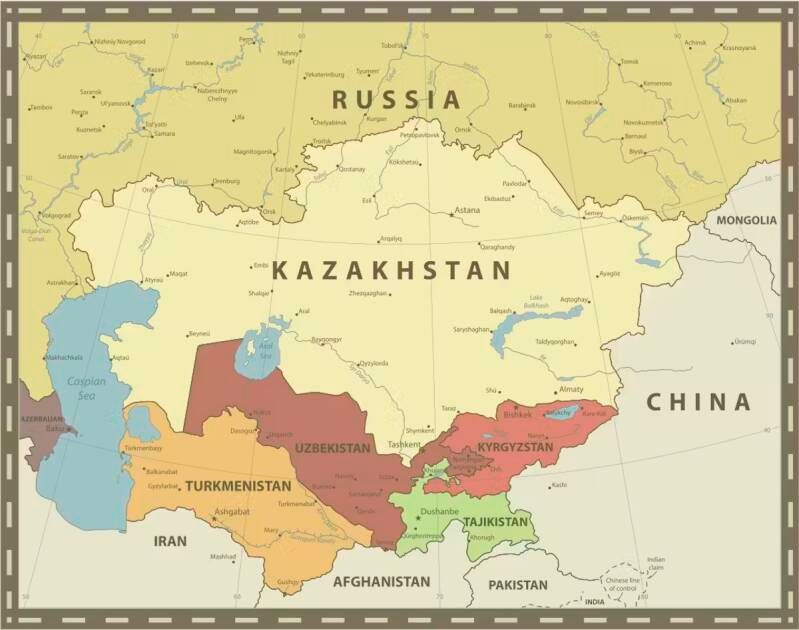
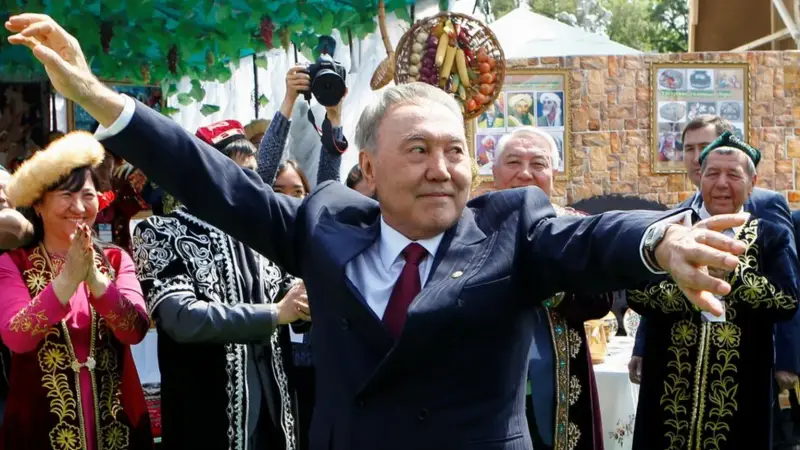
Over the 35 years that the Central Asian Republics—Kazakhstan, Kyrgyzstan, Tajikistan, Turkmenistan and Uzbekistan—have enjoyed their independence from the Soviet Union, authoritarian rule by former Communist Party bosses and tribal headmen have thwarted attempts to establish a parliamentary democracy in the political fabric of the various states. Nursultan Nazarbayev in Kazakhstan had a stranglehold over the nation for three decades, the longest rein of all the CAR autocratic leaders. Appointed first secretary of the Kazakh Soviet Socialist Republic (SSR) in 1989 he was elected unopposed as foundation president of newly independent Kazakhstan in 1990. Nazarbayev consolidated his hold on power through a sequence of increasingly blatantly undemocratic elections, neutralising political opposition, nepotism and systemic corruption and human rights abuses. As a concomitant of all this Nabarbayev played the personal venerationcard which helped to underpin the totality of his paternal control over the state. Ordinary Kazakhs wereinundated with everyday reminders of Nabarbeyev’s centrality in their lives, with the autocrat’s eponymous overlay on Kazakh society – universities, schools, airports, parks, avenues, etc were named after him. Statues of him adorned squares, his portrait emblazoned on Kazakh banknotes. No excess of adulation was too much, he was bestowed with the title of Yelbasy (“Leader of the Nation”) and in 2019 a sycophantic parliament even renamed the country’s capital, Astana, “Nursultan” in his honour(ꪖ).
Nabarbayev’s fellow dictator in neighbouring Turkmenistan, Suparmurat Niyazov, pursued a similar path to forge an iron grip on his country. Niyazov who also came to the presidency from being first secretary of Turkmen SSR under the Soviets managed to stay at the helm until his death in 2006. He did so by purging rivals from administrative posts, especially those from Turkmenistan’s largest and most influential Teke tribe. Seeing off regional challengers enabled Niyazov to centralise the political system and implement a personal style of rule over the Turkmen, demanding an unwavering loyalty to the presidency. Niyazov’s cult of personality followed the Stalinist template, adopting the title Türkmenbaşy (“Father of the Turkmen People”) which he reinforced on the Turkmen consciousness by renaming January “Türkmenbaşy”. Niyazov added the usual glosses to his personality cult with standard shows of self-glorification for public consumption, erecting a huge rotating golden statue to himself in the capital Ashgabat.
If we turn to Uzbekistan, the most populated of the CARs, Islam Karimov is the political heavyweight who trod that same well-worn path to dictatorial dominance as his counterparts in Kazakhstan and Turkmenistan. Karimov rose from party boss in the old Uzbek SSR to be elected on suspicious grounds as the first presidentof independent Uzbekistan. Moving to consolidate power, he eventually reduced both the legislature (the supreme parliamentary body) and the judiciary to “rubber stamp” status, “effectively serv(ing) as instruments ofthe executive branch" (ie, the president)(Freedom House). By the time Karimov died in 2016 there were elements of the personality cult on display—Karimov’s ho-humdrum tracts university-required reading forstudents; comparisons with historic Turco-Mongol conqueror Tamerlane—but the cult worship of the posthumous leader really took off under his successor as president, Shavkat Mirziyoyev. In death Karimov was granted the title of Yurtboshi (“Hero of Uzbekistan”), statues of the late dictator were unveiled and museums were named in his honour.
Emomali Rahmon, president of Tajikistan since 1994, has also been the beneficiary of the contagious, uncritical leader worship phenomena prevalent throughout Central Asia. Having led Tajikistan through a devastating civil war in the 1990s, the state-controlled media promoted Rahmon as “Saviour of the Nation” and “Founder ofPeace and National Unity”, echoing the titles lavished on the presidents in Tashkent and Astana. Schoolchildren are indoctrinated with a narrative about the president’s “heroic life and deeds”; fawning poets and clerics sing his praises in overblown song and verse for the public to lap up; villages have been named after him (‘Rahmonobod’), statues erected, etc. Critics of the regime have attributed the upsurge in the projection of Rahmon’s personality cult that occurred in the 2010s to Tajikistan’s declining economics. The near-deification of Rahmon as leader has gone hand-in-hand with the regime’s monopolisation of power and financial control in the hands of the president and his family and the marginalising of political opponents and restriction of citizens’ freedoms.
Kyrgyzstan is in some respects the odd man out in this pentad of republics in the region. Since gaining independence from the USSR it has not been dominated by one political figure for many years but has had several elected presidents, a reflection of the nation’s greater tolerance for parliamentary democracy(᥇). The Kyrgyzs have a different take on personality cults as well. During the rule of successive presidents Akayev, Atambayev and Japarov, there were attempts to foster moderate cults of personality(ᥴ), however, culturally, Kyrgyzs tend not to worship living autocrats but instead they look to the historic oral epic of the mythic warrior-hero Manas. Monuments to Manas abound in the Kyrgyzstan capital of Bishkek and other cities and leaders invoke his name as a device to generate a sense of national cohesion.
ಠಠಠಠಠಠಠಠಠಠಠಠಠಠಠಠಠಠ
(ꪖ) the capital reverted to Astana in 2022
(᥇) however political pluralism in Kyrgyzistan has had a hit under the current president, the ever-more autocratic Sadyr Japarov who has increased his power at the expense of parliament
(ᥴ) not exactly a full-blown personality cult but Japarov elicits a messianic following among his supporters
Reference articles:
‘Kazakhstan in Context: Cult of Personality’, Kenza Bouanane, Human Rights Foundation, 18 February 2022, http:hrf.org
‘Uzbekistan: Even in death, cult grows around Karimov’, Joanna Lillis, 06 July 2018, www.eurasianet.org
Katarzyna Jarosz, ‘Medieval Heroes and Building Personality Cults’ in Museums in Central Asia and the Construction of National Narratives (Sept 2025) www.researchgate.net
‘Turkmenistan and Central Asia after Niyazov’, Dr Stephen J. Blank, US Army War College Press, 2007
‘Emomali Rahmon’s Ever-Growing Cult of Personality’, Casey Michel, The Diplomat, 18 February 2016, www.thediplomat.com
⇓ Nursultan Nazarbayev, a 30-year career as Kazakhstan tyrant
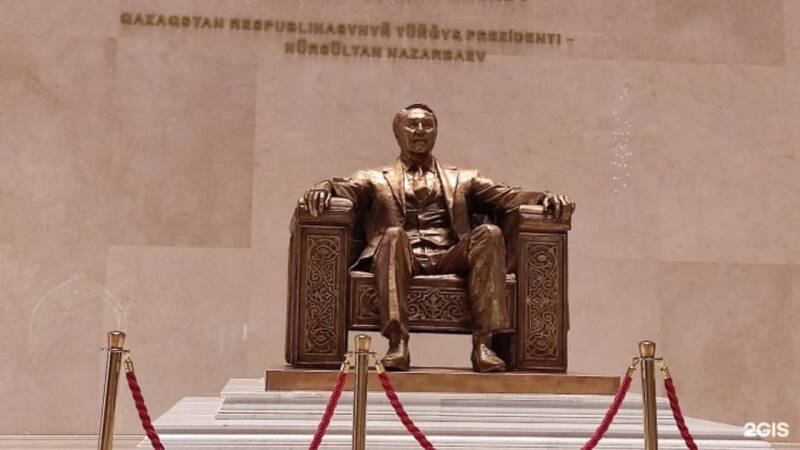
⇑ Former president Nazarbayev cast in bronze

Italy vs Japan, the Fallout from Italy’s Defection from the Axis Tripartite Alliance
⇧ Italian Concession in Tianjin
Historic Wentworth Park: This Working Class Sporting Life of Dog Nights, Speedway Thrills and First–Generation Rugby League
Artist’s impression of post-greyhounds Wentworth Park (image: City of Sydney) ↓
Filling the Beatles’ Void – with a Little Help from Melody Maker: Rock Music’s Friendly Rivalry, Led Zeppelin and Yes
Plant and Page, Led Zeppelin in concert, 1975 (photo: Laurance Ratner/Wireimage) ⍗
Is Chess a Sport?
663 words
Why were Reparations Imposed on Finland During World War II?
(above) Finnish machine gun crew and (R) captured Soviet tanks in 1939–40 Winter War
A Long Drawn-Out Saga of Transnational Debt Recovery: The World War One Reparations
⇓ Europe, 1923 (GW Bacon map)
Far-Right Fringe Politics in the Age of the Dictators: Australia’s New Guard, White Army and Australia First Movement
New Guardsman Francis de Groot, under arrest for illegally cutting the ribbon at the opening ceremony of the Sydney Harbour Bridge, preempting Premier Lang (1932) ⇩
The Politically and Culturally Sensitive Practice of Mapping the World: The Quest for a More Accurately Proportional Projection
⬅︎ Gerardus Mercator
Slave–made Societies in the Americas: The Quilombolas and Cimarrons, from Bondage to Freedom
Bingo in the 21st Century: A Generational Upgrade for the Traditional Game of Chance
⍐ “Eyes down”: 1960s bingo “excitement” in Britain
The Eclipse of the RKO Studio: How One of the “Big Five” Players in Hollywood met an Inglorious End
⇧ Howard Hughes, playboy aviator-turned-movie mogul (photo: Courtesy: LOC NYWTS Photograph Collection)
The Art of René Magritte: Things are Not What they Seem
Le Jockey Perdu, (early Magritte, 1926) ➲
Create Your Own Website With Webador